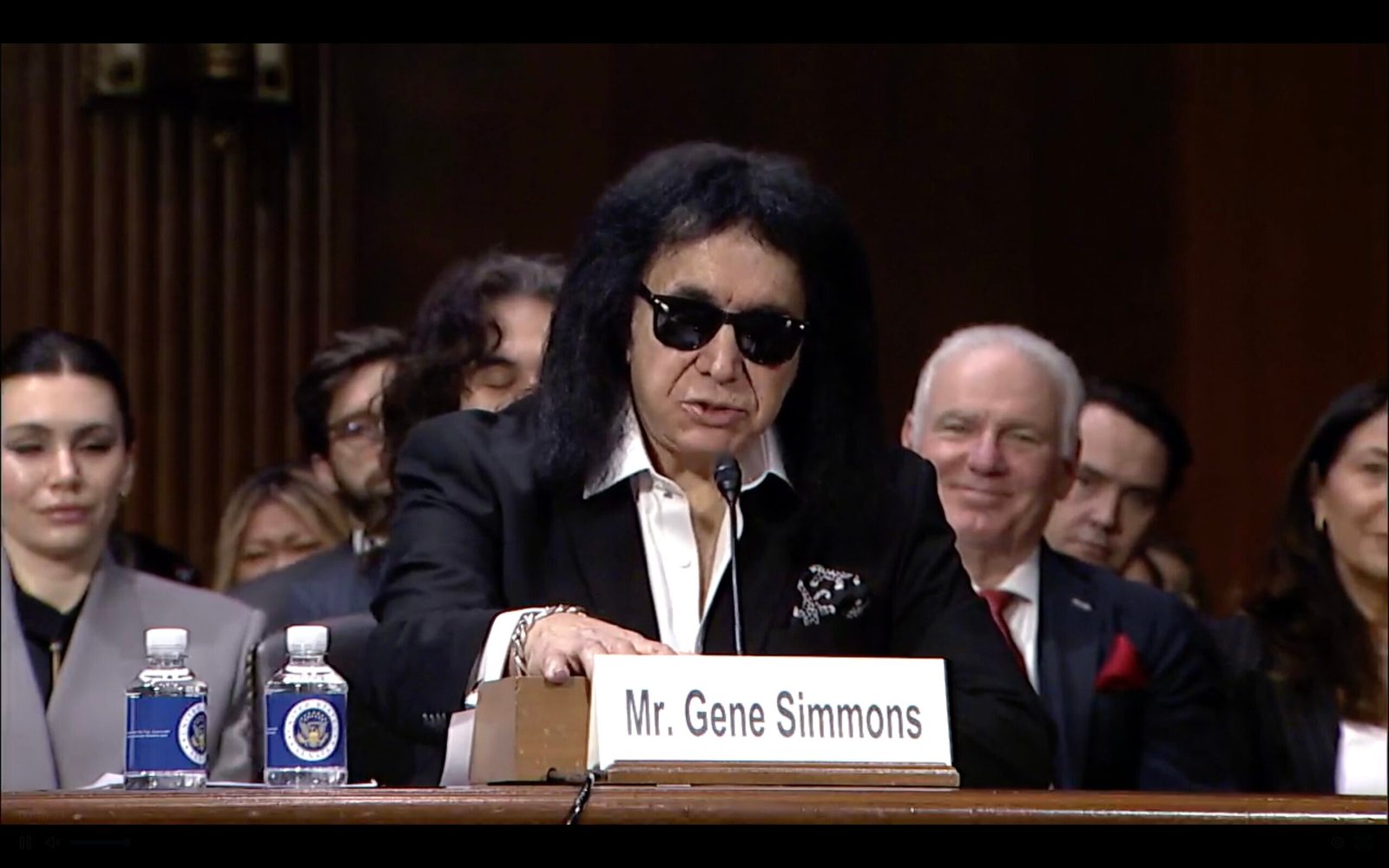
“This is an archaic injustice that’s been around for a long time and it’s un-American.” – Gene Simmons at Senate IP Subcommittee hearing.
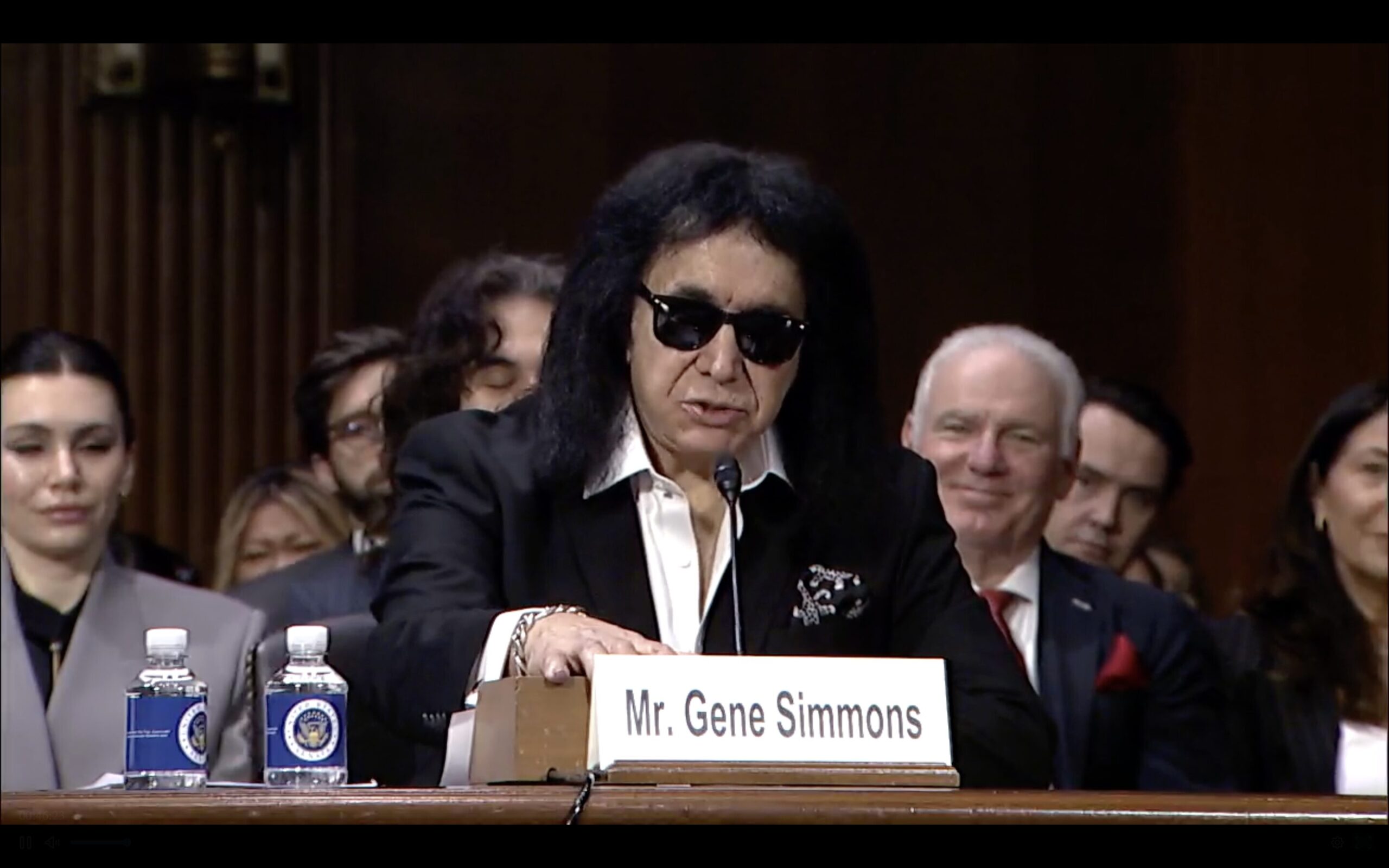 The Senate Subcommittee on Intellectual Property held a hearing on Tuesday that included testimony from the band Kiss’s co-founder, Gene Simmons, to discuss issues surrounding a proposed bill to compensate performers when their songs are broadcast on terrestrial radio stations.
“America remains the only democratic nation and one of the few countries globally that does not compensate performers or copyright holders when their songs are played on AM/FM radio,” said IP Subcommittee Chair Thom Tillis (R-NC). According to Senator Adam Schiff, the Subcommittee’s Ranking Member, the United States stands alongside only Iran and North Korea in refusing to recognize a performance right for sound recordings on the radio (Cuba also does not have a performance right, according to other witnesses).
Senators Alex Padilla (D-CA) and Marsha Blackburn (R-TN) are sponsoring a bill, “The American Music Fairness Act,” “to provide fair treatment of radio stations and artists for the use of sound recordings.” A press release on the bill said the legislation would require radio broadcasters to pay royalties to creators for songs played on air and would provide exemptions for small and local stations that would allow them to play unlimited music for only $500 annually.

The hearing included a representative of the broadcasting industry, Henry Hinton of Inner Banks Media, which operates five FM radio stations in eastern North Carolina. According to Hinton, who also serves on the National Association of Broadcasters (NAB) Radio Board of
Directors, the proposed legislation would be “simply economically untenable for local radio broadcasters.” Between fees to the Federal Communications Commission (FCC) and royalties to performing rights organizations like ASCAP, BMI and streaming collectives, Hinton said an additional royalty scheme would be too “burdensome.”
But Simmons called the lack of royalties to artists for radio performances an “injustice” that has been going on for decades. “AI is right around the corner,” Simmons said. “This is an archaic injustice that’s been around for a long time and it’s un-American… New artists really need these pennies when they get heard as their career starts on radio, but there’s no income.”
Simmons repeatedly noted that the radio industry has made $14 billion just in the last year and implored Hinton to share some of that with artists.
Blackburn hit back particularly hard at Hinton, challenging his testimony that the proposed bill would cause harm and that radio offers a free service to consumers and free publicity for artists. She asked:
“Do your advertisers look at you and say free service? They’re paying what you say is the rate, and the more listeners you have the more they’re going to pay you for that advertising and the better music that you play that people want to hear, the more you’re going to be able to charge them. If we shut down all the music, you wouldn’t have anything but a talk station.”
Also testifying was Michael Huppe, President and CEO of Sound Exchange, a nonprofit designated by the U.S. government “to ensure that recording artists and labels are paid performance royalties when their music is played on certain digital streaming services.” According to Huppe, Sound Exchange delivers over $1 billion in royalties annually to 800,000-plus creators.

Huppe noted in his written testimony that China is more protective of artist and label rights than the United States, having amended its laws in 2021 to provide a performance right for terrestrial radio. He challenged Hinton’s and broadcasters’ assertion that radio still promotes artists. “That is no longer the case,” he said. Streaming platforms now account for 85% of music industry revenue and music discovery happens on social media, Hinton noted. “The days of hearing a song on the radio and going out and buying a CD or album at a store are long gone.”
Tillis closed the hearing by imploring stakeholders to strike a “Goldilocks balance” and specifically asked Hinton and NAB to submit modeling on the likely economic impact to the broadcasting industry, which Hinton said has not yet been done.
The Council for Innovation Promotion (C4IP) sent a letter to Tillis and Schiff yesterday supporting the American Music Fairness Act and called the failure to enact such a right a “longstanding inequity in the copyright code that devalues sound recordings to the detriment of artists and copyright owners.”