
A new settlement Israel is planning to build on a Unesco heritage site in the occupied West Bank threatens to erase invaluable heritage and cut off Palestinians from accessing their land, warn NGOs and residents.
Last Wednesday, Bezalel Smotrich, Israel’s far right finance minister and a long-time settler activist, approved the establishment of the Nahal Heletz settlement in the occupied West Bank. According to Peace Now, an Israeli organisation that tracks settlements, the plan will claim more than 150 acres of the Unesco-listed Land of Olives and Vines—cultural landscapes of Southern Jerusalem, Battir. The area, located a few kilometres south-west of Jerusalem, was inscribed as a Unesco site in 2014. It features ancient terraces and sophisticated irrigations systems that bear witness to thousands of years of human activity.
Peace Now warns that the planned settlement’s location, amid several Palestinian villages, will create “an isolated enclave deep within Palestinian territory” and prevent residents from accessing their land.
“Based on the settlers’ past experience, it is highly likely that parts of the land outside the blue line [settlement borders] will be incorporated into the settlement, and Palestinians will be denied access to their land,” the organisation stated in a press release.
Smotrich made the announcement on his X account, calling it a “historic moment”, and adding: “No anti-Israeli and anti-Zionist decision will stop the further development of the settlement. We will continue to fight the dangerous idea of a Palestinian state and establish facts on the ground.”
In the southern part of the Unesco property, settlers have already begun encroaching on Palestinian land outside the boundaries of the planned Nahal Heletz settlement.
Locked out by settlers
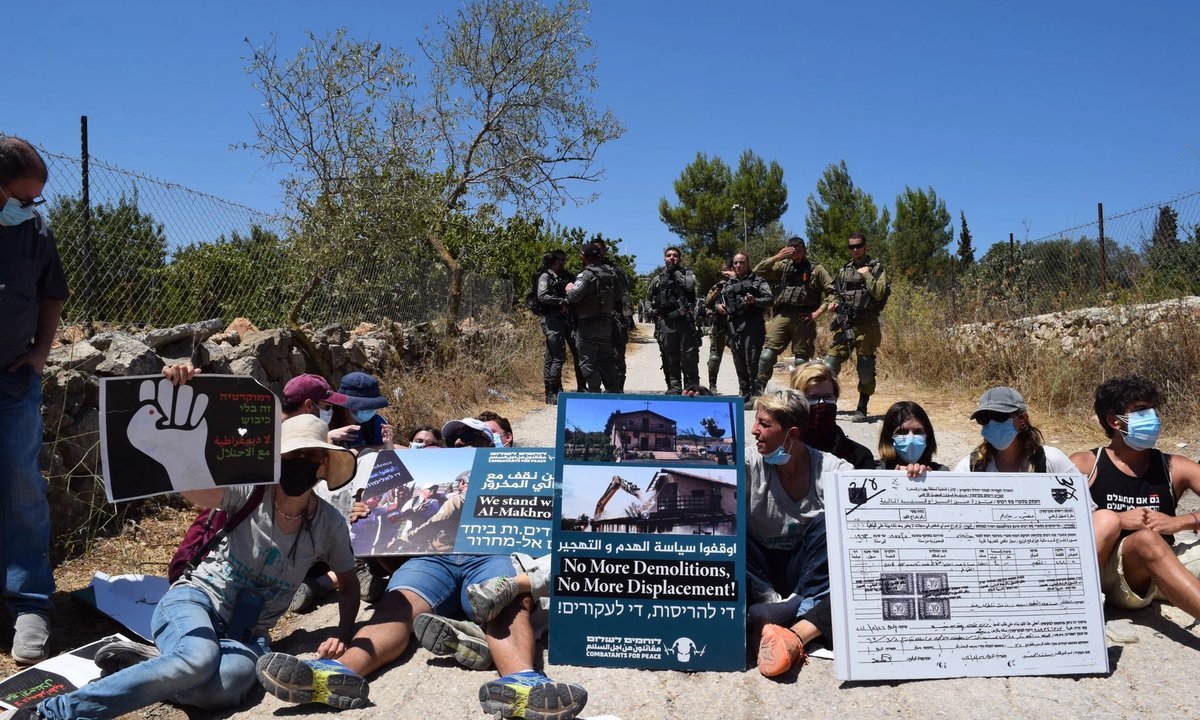
On 31 July, Alice Kisiya, a Christian Palestinian with Israeli citizenship, discovered she was locked out of her land by a new gate installed by settlers who had taken over her property.
Kisiya contacted the police and was joined by activists who attempted to help her regain access. Despite presenting her documents to the police and army on-site, she was instructed to leave, as the area had been designated a military zone. This order prevents her and her family from accessing their land for a month, while the settlers have been allowed to remain. “[My land] was not a military zone before; all of a sudden it is,” she tells The Art Newspaper.
A group of activists, including Christians, Muslims, and Jews has joined Kisiya in her fight to reclaim her land. They have set up an encampment where they hold peaceful events and sleep.
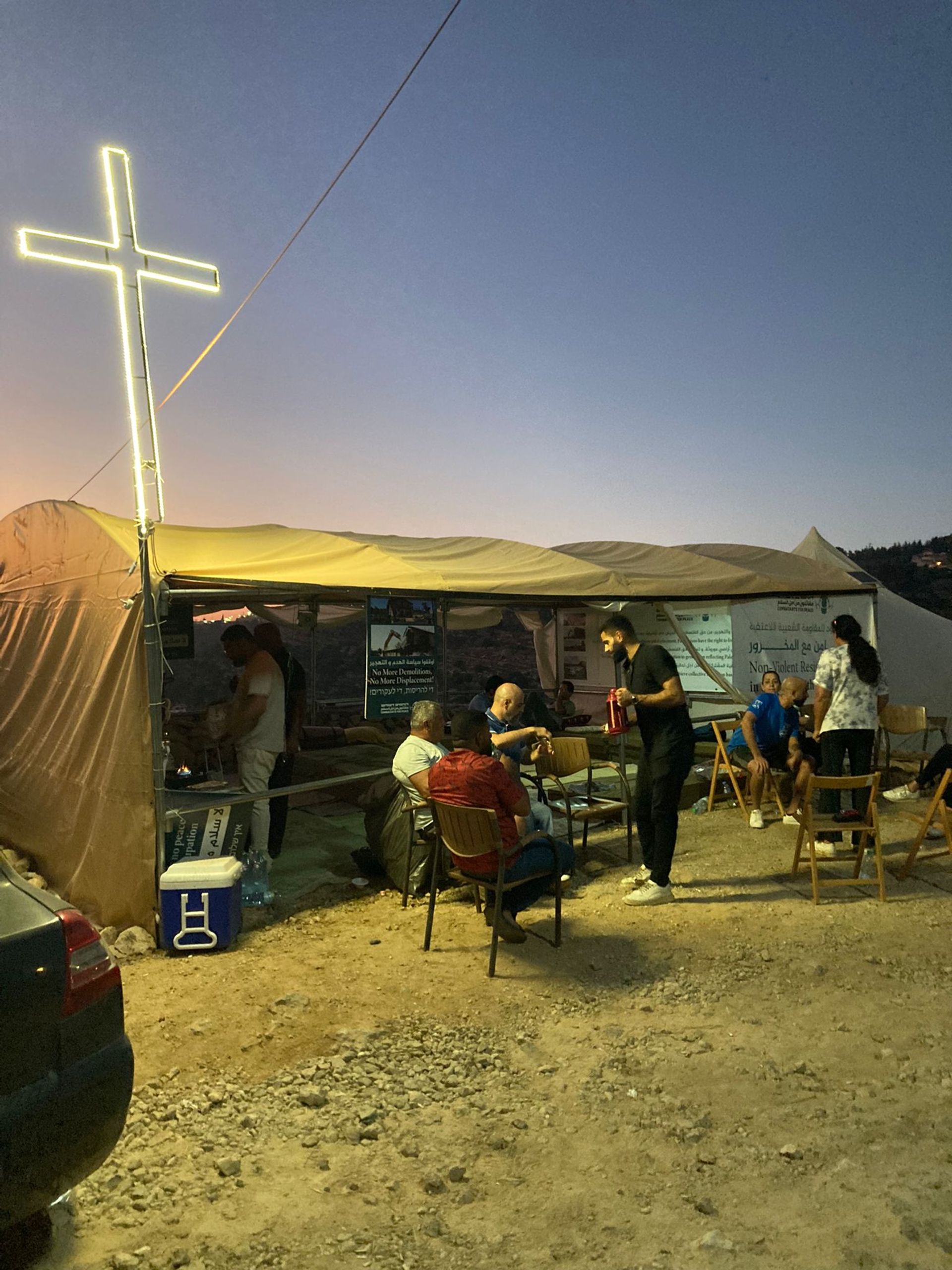
Kisiya and other activists have set up an encampment
Photo: Alice Kisiya
“We are not answering with violence, we are answering with love. I think love is much stronger than war, than hate. This message and the vibrations we are spreading it’s very important,” she says.
Kisiya’s family, who she says has owned the land for at least 40 years, has fought a prolonged battle for their property. Their popular restaurant was destroyed four times due to permitting issues. The last destruction, in 2019, affected their home, restaurant and an ancient well that served their land. They also fell victim, Kisaya adds, to an illegal land grab by an Israeli group that claimed ownership with forged documents.
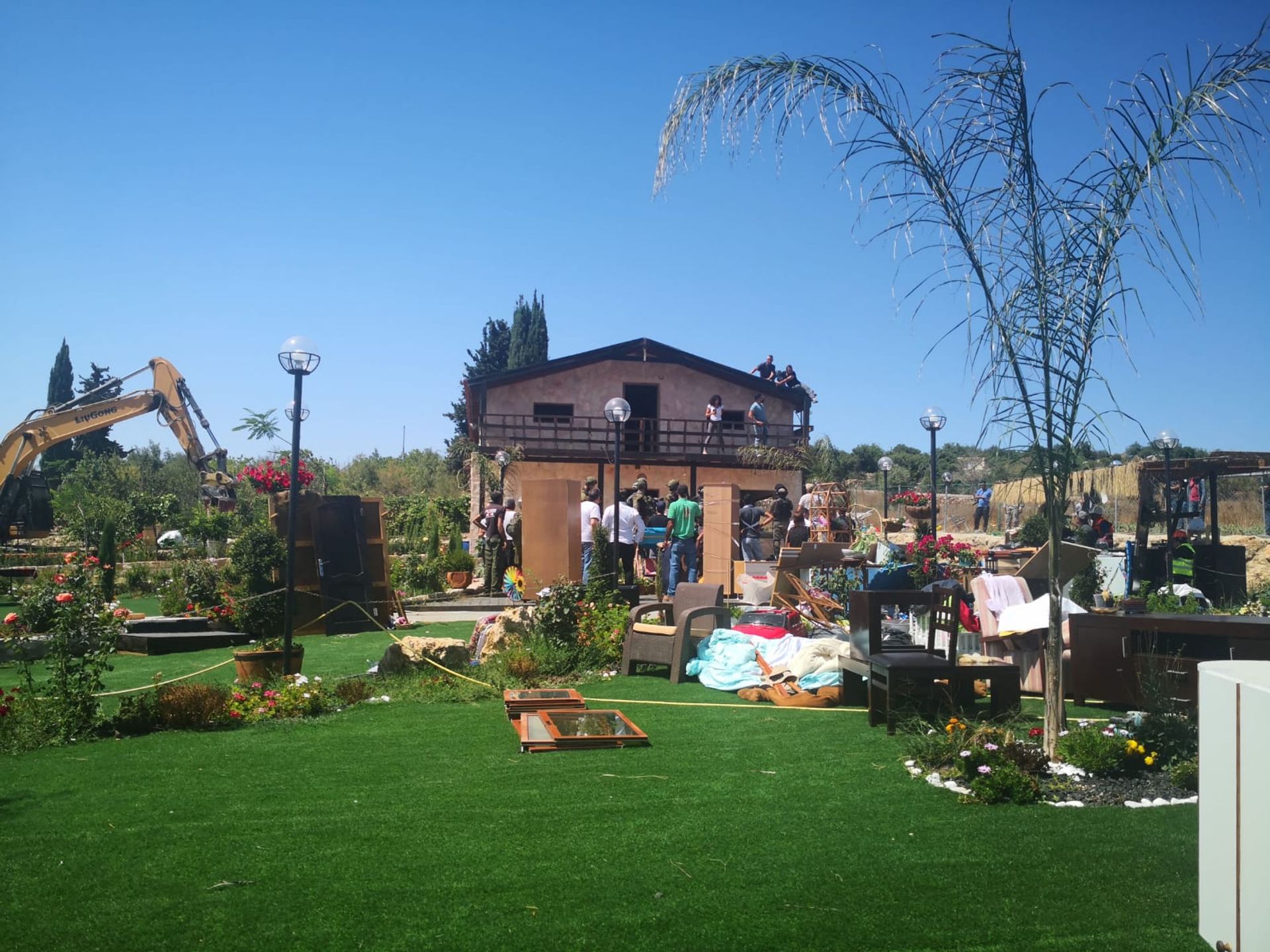
Kisiya’s family property was demolished in 2019 due to permitting issues
Photo: Alice Kisiya
In 2023, after a lengthy court battle that cost them approximately 500,000 ILS ($135,000), they won their case.“We have been in this struggle for more than 20 years. We are financially, psychologically, physically tired. But we are not giving up. My goal is to take it all back,” she says. “It’s time for peace. Enough blood, enough wars, enough killings. Just justice,” she adds.
The Israeli NGO Emek Shaveh and Israeli-Palestinian NGO Combatants for Peace, along with Peace Now have assessed that the new settlement, another illegal outpost established in December 2023 and the takeover of Kisiya’s land will not only disrupt Palestinian territorial continuity but also directly threaten the cultural site.
Fragmenting Palestinian space
“These actions are not only fragmenting Palestinian space and depriving large communities of their natural and cultural heritage, they also pose an imminent threat to an area considered to be of the highest cultural value to humanity,” the press release states.
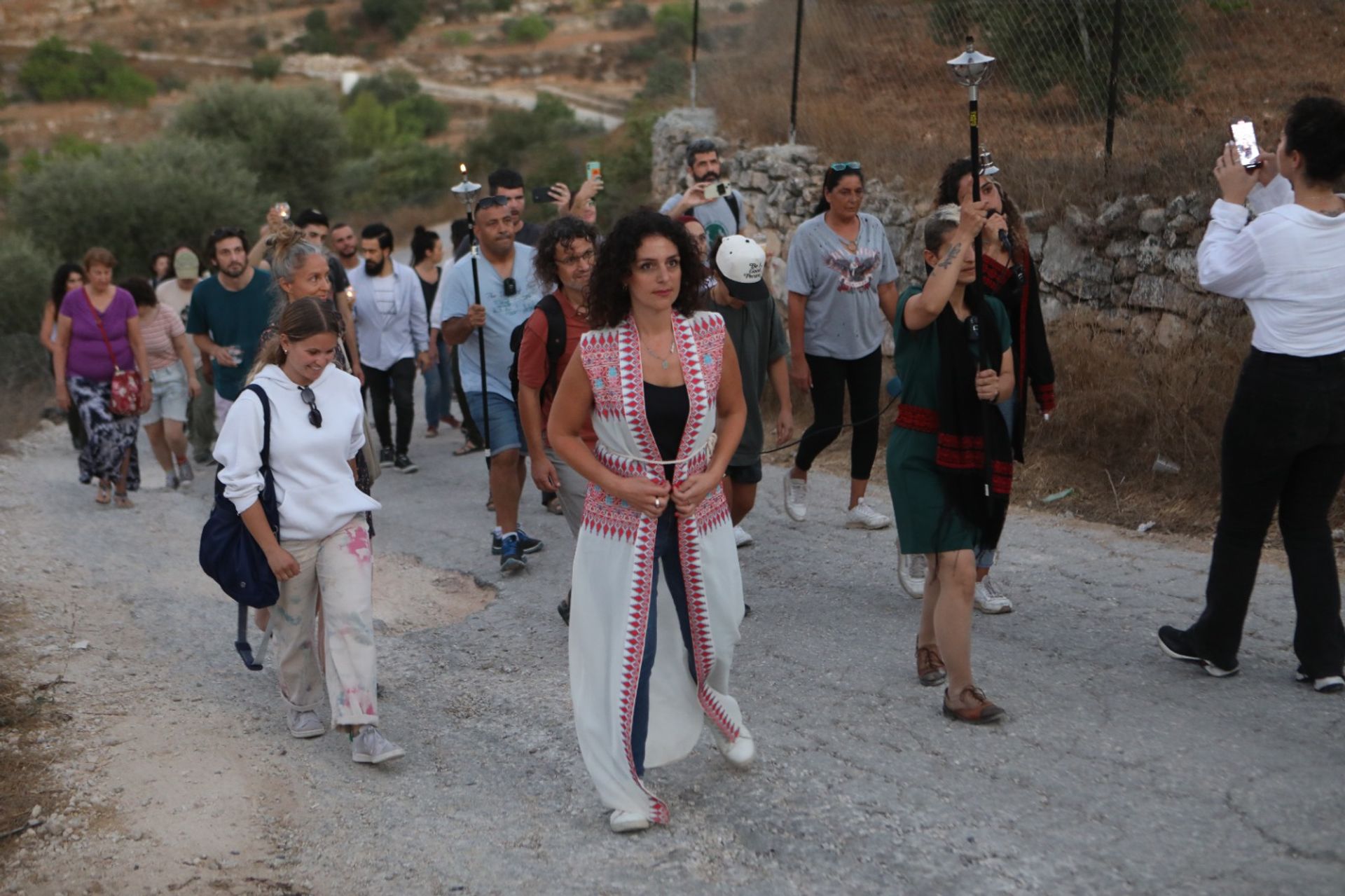
Kisiya and activists have been holding peaceful protests
Photo: Alice Kisiya
Xavier Abu Eid, a Christian Palestinian whose family owns land near Kisiya’s, explains that Israel could use security concerns as pretext to restrict Palestinians access their land and build roads exclusively for the settlers. This could, he says, force Palestinians to take longer routs, or require them to obtain special permits to access their own land.
He says his family, who have owned their land for generations, cannot obtain permits for basic services such as electricity. (Israel issues very few building permits to Palestinians.) Abu Eid is certain, he says, that the new Nahal Heletz settlement will not adhere to Unesco’s guidelines. “Israel does not recognise [the area] as a heritage property. Even if it is a historic area and it’s in danger, they just don’t care.”
Abu Eid highlights that his family has already lost a significant portion of their land, which was outside the heritage site’s borders, to the construction of Route 60—a 146-mile road believed to follow the ancient “Road of Patriarchs” from biblical times. The road passes through the West Bank, connecting Israel’s Nazareth to Beersheb. However, he and other Palestinians are not permitted to access the stretch of the road built on their land because it connects to a Jewish settlement, although they can use other sections of it.
According to Abu Eid, around 90% of the land in this area is owned by Palestinian Christians, who he says are at risk of being displaced from the region once again. “Many Christians in the West do very little to help those Christians who are struggling to stay. And on the contrary, we see that they are actually supporting those who are making the Christian presence in Palestine disappear, which is the Israeli occupation,” he says.
What can Unesco do to help?
He also suggests that Unesco should do more. “I’m not claiming that Unesco has the capacity to stop the settlements, but the least you would expect is to condemn it [the settlement], which is something we don’t see. It’s very disappointing,” he adds.
In a statement sent to The Art Newspaper, Unesco said that it is “closely following the state of conservation” of the property. It adds that during its 46th session, the World Heritage Committee “took note with concern of the reports of ongoing illegal constructions, settlements and other developments within the property and its buffer zone” and asked “all parties to avoid any action that would cause damage to the property”.
In July, the International Court of Justice (ICJ) issued a non-binding advisory opinion declaring Israel’s presence in the occupied Palestinian territories unlawful and called for an end to it. The court said Israel has to stop its settlements in the West Bank and East Jerusalem as soon as possible and evacuate all existing settlements. The court, which was asked to examine the issue at the request of the UN General Assembly, also said that other nations were obliged “not to render aid or assistance in maintaining the situation”.


