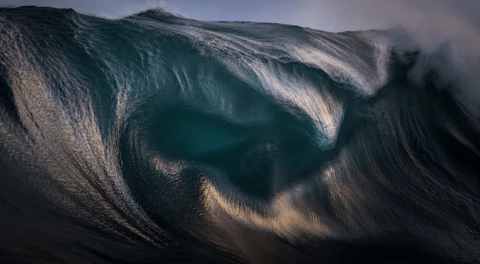

Working the arts desk of The Canberra Times, we’d be hard-pressed to name more than a handful of artists who aren’t, at some level, inspired by the natural environment in their work.
It has become almost a cliche, to be mindful of one’s natural surrounds as an artistic statement, rather than a state of being. But the Waterhouse Natural Science Art Prize takes it to the next level. In asking artists to share how the natural world inspires them, the prize is a challenge to make a statement, about the scientific and environmental issues facing our planet.
And, over the past 11 years, artists all over Australia have ably stepped up to the mark. Run out of the South Australian Museum, the prize is now a stunningly popular show and one of the richest natural art prizes in the country, with a prize pool of more than $100,000.
And each year, a selection of the finalists travel to Canberra to go on display at the National Archives of Australia.
For many Canberrans, the show is a highly anticipated yearly event. People in this city care about science and the environment, and they care just as much about art, so seeing so many works in so many mediums incorporating the two is highly satisfying.
The museum’s manager of galleries and exhibitions, Tim Gilchrist, says while it’s not surprising that the prize is popular in Canberra, its growing following is a source of pride.
“It really connects with people on so many different levels. Obviously on the aesthetic level, but [also] the messages that are in the work, which is why we’re interested in running a natural science art prize,” he says.
“It’s to start that conversation about what is natural science. And the joy of it being through art work is that people can look at it and say, ‘That’s not about natural science’, and the next person says, ‘Why not?’. That starts a conversation. It engages people on multiple levels, which is great.”
There were 101 finalists in this year’s prize, selected from hundreds of entries from around the world – 11 countries, in fact.
“This year we had a quite a few relating to climate change, a good amount referring to species decline with extinction messages and a good amount of human impact coming through,” says Gilchrist.