
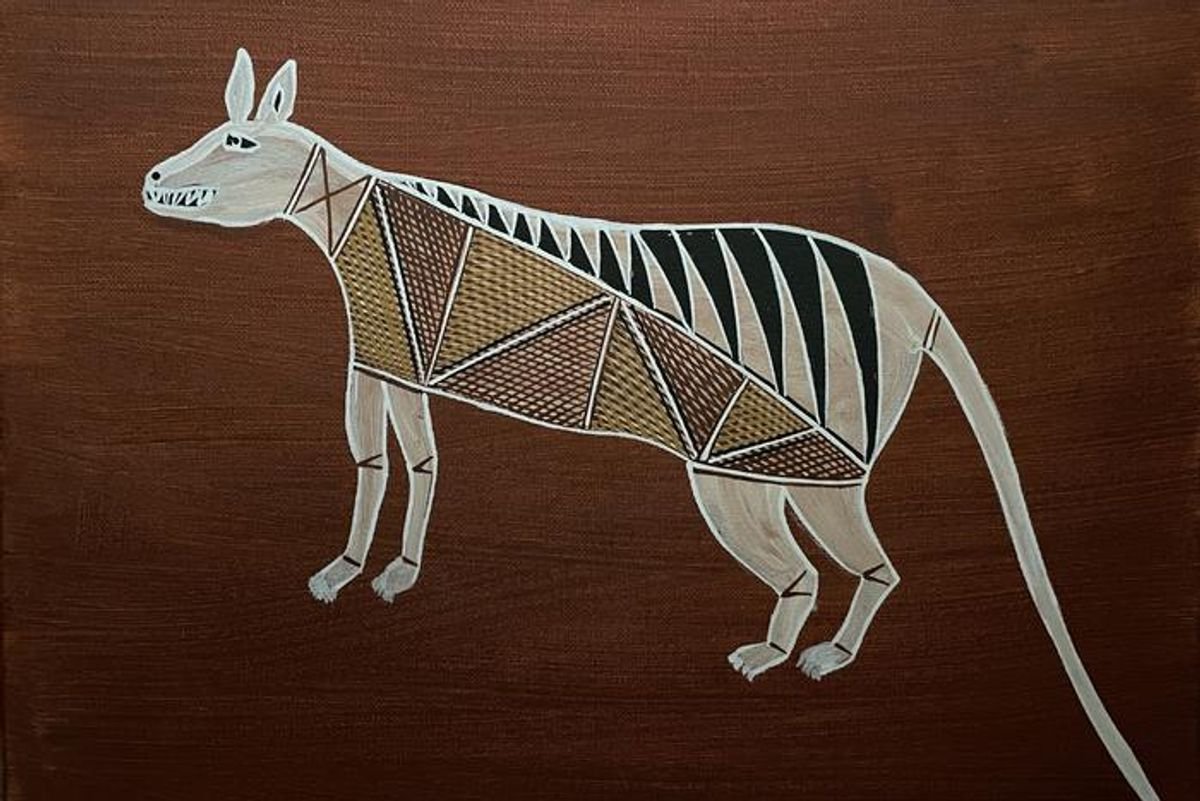
Recently identified rock art in northern Australia may offer a surprising clue about when the elusive Tasmanian tiger vanished from the mainland. Alongside depictions of Tasmanian devils, the artworks suggest these animals may have survived far longer than previously believed, while also highlighting their cultural importance to Indigenous communities.
A research team from Griffith University in Queensland identified 14 images of the now-extinct Tasmanian tiger and two of the Tasmanian devil at sites in northwest Arnhem Land in the Northern Territory. By analyzing the paint used by Aboriginal artists, researchers dated the images to around 1,000 years ago, raising the possibility that thylacines roamed mainland Australia up to 2,000 years later than current estimates suggest.
“Thylacine rock art offers rare insight into how people related to this animal in the past,” said study co-author Andrea Jalandoni from the Griffith Centre for Social and Cultural Research in a press statement. “These depictions show that the thylacine held a meaningful place in everyday life and local knowledge long before it went extinct.”
Read more: Dire Wolf De-Extinction Breeds Both Hope and Uncertainty
Dating the Tasmanian Tiger’s and Tasmanian Devil’s Disappearance

Ancient red and white painting of a thylacine
(Image Credit: Paul S.C. Taçon)
The Tasmanian devil (Sarcophilus harrisii) and the striped, dog-like Tasmanian tiger, also known as the thylacine (Thylacinus cynocephalus), are believed to have disappeared from mainland Australia around 3,000 years ago. That timeline is largely based on limited skeletal remains from that time, such as a Tasmanian devil jawbone found near the East Alligator River in the Northern Territory.
Researchers have long suggested that both species declined due to competition with dingoes, which arrived in Australia between 3,500 and 5,000 years ago, as well as possible impacts from climate change and human hunting.
The thylacine’s final chapter is better documented: the species survived in Tasmania until the 20th century, before being driven to extinction in the 1930s. A government-backed bounty program aimed at protecting livestock played a major role in its demise, despite later research showing the threat to be exaggerated. Legal protection came only months before the last known individual died.
Cave Paintings May Rewrite the Timeline

Thylacine on stone
(Image Credit: Benedict Dyson)
The newly analyzed artworks are helping researchers refine that earlier extinction timeline. As described in the study published in Archaeology in Oceania, the materials used in the paintings provide key dating clues.
The artworks were created using red and yellow ochre along with white pipe clay — a pigment that typically does not last more than about 1,000 years. This suggests that the paintings and the animals they depict are relatively recent.
Beyond dating, the art itself offers insight into how these animals were perceived. According to Paul Taçon, Griffith University Chair in Rock Art Research, the contrast in representation is striking: about 160 known thylacine images compared to just 25 depictions of Tasmanian devils. This may indicate the thylacine was both more widespread and more culturally significant.
“The artists who made the more recent paintings may have seen actual living thylacines, and some of these creatures may have survived longer in Arnhem Land,” said Taçon in the press release. “Alternatively, artists may have been inspired by earlier paintings. Regardless, the thylacine remains culturally important today, and some contemporary artists make paintings of Tasmanian tigers on bark, paper, and canvas. It even has a name: Djankerrk.”
The Thylacines Legacy Still Lives on in Aboriginal Stories

Early European drawing of a thylacine and a Tasmanian devil
(Image Credit: Harris 1808, Figure 1, between pages 174 and 175)
Some of the paintings also show signs of being retouched, suggesting these animals remained culturally important across generations.
Oral histories add another layer to this connection. In some traditions, thylacines were kept as companions by the Rainbow Serpent, a powerful ancestral being. Said to live in rock pools, Tasmanian tigers became associated with water and swimming.
“They used to tell stories about going hunting with thylacines,” said Joey Nganjmirra, a member of the Djalama Aboriginal clan from western Arnhem Land and co-author of the study, adding that the animals played an important part in his ancestors’ lives.
“The thylacine lives on in western Arnhem Land not as a ghost from the past but as a meaningful creature that still has present-day significance,” said Taçon.
Read more: 5 of the World’s Most Fascinating Cave Paintings
Article Sources
Our writers at Discovermagazine.com use peer-reviewed studies and high-quality sources for our articles, and our editors review for scientific accuracy and editorial standards. Review the sources used below for this article: