

A team led by a researcher from the National Center for Scientific Research (CNRS) has achieved a milestone in prehistoric archaeology by confirming through absolute dating the age of several parietal representations from the Font-de-Gaume cave, located in Dordogne, France.
The results, published in the journal Proceedings of the National Academy of Sciences (PNAS), represent the first time precise dates have been obtained for Paleolithic rock art in this region using the carbon-14 technique, something that until now had been considered unfeasible due to the chemical composition traditionally attributed to the pigments.
Until this study, there had been a widespread technical impossibility in reliably dating the cave paintings of the region, including the famous ones from Lascaux. The main reason lay in the assumption that the black lines had been made exclusively using iron and manganese oxides, mineral compounds that do not contain carbon and therefore cannot be dated through radiocarbon methods.
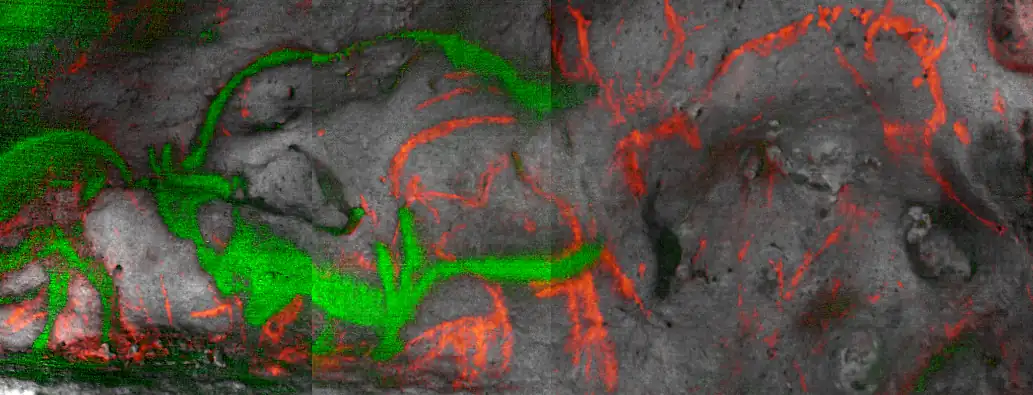
However, the research team found that no systematic empirical verification had ever been carried out to confirm the complete absence of carbon-based materials in those paintings. To resolve this uncertainty, the scientists decided to apply a non-invasive analysis protocol to two specific black motifs from the Font-de-Gaume cave: the figure of a bison and a design interpreted as a possible anthropomorph or mask.
The methodology used combined two advanced chemical characterization techniques. On the one hand, the researchers employed Raman microspectrometry, a technique that allows the identification of the molecular composition of materials through the interaction of light with the chemical bonds of the sample. On the other hand, hyperspectral imaging was used, a technology that measures the reflectance of light at every point on the analyzed surface and makes it possible to deduce the chemical composition of the coloring compounds present.
Both techniques, widely used in the field of cultural heritage sciences as well as in biomedical, agricultural, environmental, and astrophysical research, have the crucial advantage of not requiring the extraction of material from the original works.
The results of these analyses were conclusive: in the black lines of both the bison and the mask, traces of charcoal were detected. The distribution of this charcoal proved to be homogeneous along the entire perimeter of the figures and was not limited to isolated points, which led the researchers to rule out, with strong justification, the hypothesis that it might be modern contamination, such as that resulting from historical graffiti or the intense tourist activity the cave has experienced since its discovery. The confirmation that the charcoal formed an integral part of the original pigment mixture opened the door to dating.
Given this finding, and on an exceptional basis, scientific authorities authorized the extraction of extremely small samples of material from the paintings themselves to subject them to the carbon-14 test. The operation was not without technical difficulties, since the amount of extractable material was minimal and the concentration of carbon in the samples could be too low to obtain a reliable measurement.

Subscribe to our newsletter
Receive our news and articles in your email for free. You can also support us with a monthly subscription and receive exclusive content.
Nevertheless, the analyses carried out at the Carbon-14 Measurement Laboratory, a national platform run by the CEA, CNRS, IRD, ASNR, and the Ministry of Culture, managed to overcome these limitations and produced results placing the paintings in the Upper Paleolithic, although with chronologies slightly more recent than previously estimated through comparative stylistic methods.
In the case of the bison, the calibrated dating provides an interval between 13,461 and 13,162 cal BP. The abbreviation cal BP refers to calibrated years before present, with the conventional reference year being 1950. This calibration is a statistical process that adjusts raw carbon-14 measurements to account for historical fluctuations in the atmospheric concentration of this isotope, as well as variations in solar activity or in the Earth’s magnetic field, factors that can distort the direct equivalence between radiocarbon age and calendar age.
The analysis of the figure interpreted as a possible face or mask revealed an unexpected temporal complexity. The different parts of the analyzed motif do not provide a single homogeneous date but instead fall into several chronological intervals. One set of traces lies between 8,993 and 8,590 cal BP, which would place it in a period much later than the classical Upper Paleolithic, already in the Mesolithic or in the transition to the Neolithic.
However, other lines from the same figure yield much older ages: a first group lies between 15,981 and 15,121 cal BP, and a second group between 15,297 and 14,246 cal BP. This disparity suggests that the mask may have been retouched or completed at different moments over several millennia, a possibility that absolute dating now makes it possible to begin considering.
The success of this analytical strategy lies in the combination of prior chemical detection with subsequent radiocarbon dating. Until now, the widespread belief in the exclusively mineral nature of the pigments had prevented researchers from systematically searching for charcoal in the black paintings of the region.
By demonstrating that this charcoal exists and can be dated, the team has established a new methodological precedent. The scientists who authored the study, from the Laboratory for Instrumental Development and Innovative Methodologies for Cultural Heritage (affiliated with Chimie ParisTech-PSL, CNRS, and the Ministry of Culture), in collaboration with the Carbon-14 Measurement Laboratory, the Natural History of Prehistoric Humanities laboratory (CNRS, MNHN, University of Perpignan Via Domitia), the Centre for National Monuments, and the Center for Research and Restoration of the Museums of France, now hope to apply this same methodology to other parietal figures in the region.
The possibility of obtaining precise dates for artistic ensembles previously considered undatable opens a new avenue of research for a better understanding of the evolution of parietal art and the human populations that produced it. It will become possible to determine more accurately whether certain caves were used continuously or in discrete phases, whether different motifs were created by culturally distinct groups, and how the chronology of Franco-Cantabrian art relates to environmental and demographic changes during the Upper Paleolithic.
The research provides a tool for addressing the fundamental questions about the meaning and function of the earliest artistic manifestations of humanity.
SOURCES
I. Reiche, L. Beck, I. Caffy, Y. Coquinot, M. Alfeld, A. Maigret, J. Tapia, M. Martinez, A. Lescale, & P. Paillet, Radiocarbon dating and chemical imaging of carbon black–based Paleolithic cave art in the Dordogne region (France), Proc. Natl. Acad. Sci. U.S.A. 123 (12) e2524751123, doi.org/10.1073/pnas.2524751123 (2026)