[ad_1]
The work of 12 artists from Afghanistan, Bangladesh, India, Pakistan and Sri Lanka is brought together in (Un)Layering the Future Past of South Asia: Young Artists’ Voices – running until August 31.
First shown at SOAS Gallery, London last year, the exhibition has been developed for Bradford and spotlights a new generation of artists whose work reflects on shared histories across South Asia and beyond.
Through textile, embroidery, collage, film, video projection and mixed media, the artists address contemporary concerns including ecological stress, depletion of indigenous resources, forced migration, gender disparity, political imbalance and the legacies of Empire. Their works explore how histories are constructed, inherited and lived in the present.

Textile and handwork feature prominently. Artists such as Varunika Saraf, Hema Shironi, Maheen Kazim and T Vinojya draw on embroidery and weaving traditions, reworking materials often associated with domestic labour into forms of feminist inquiry and cultural memory. In Purvai Rai’s large-scale embroidered panels framed with basmati rice, agricultural depletion and global capital are bound into the very surface of the work.
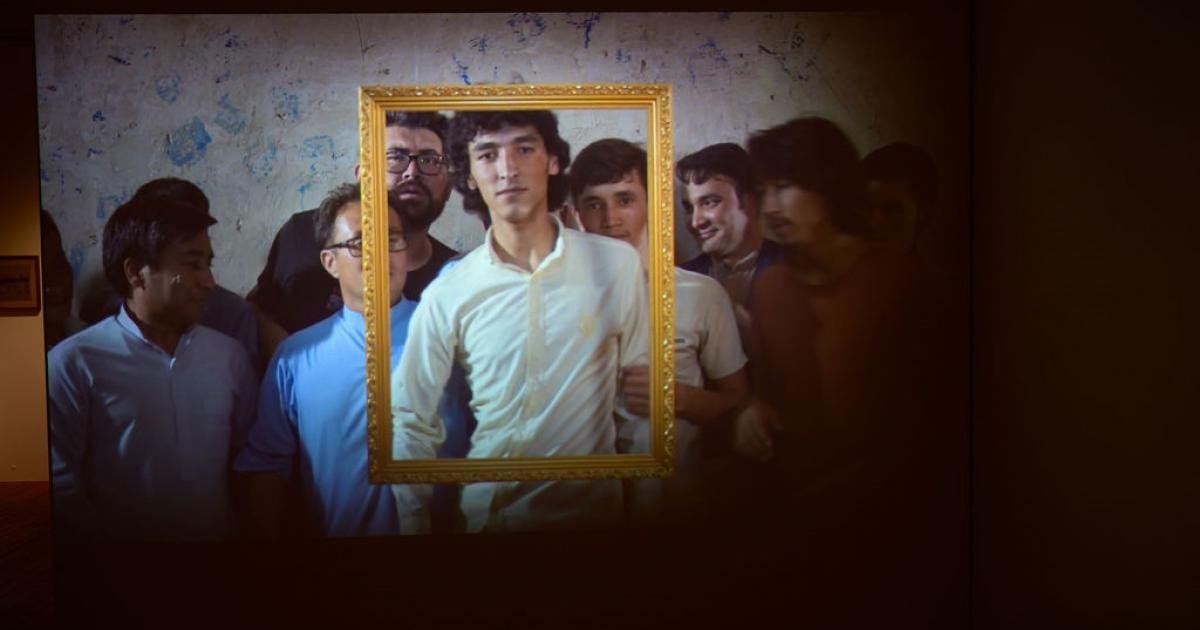
Video and moving images are equally central. Moonis Ahmad’s digital film explores militarisation, surveillance and layered time through photogrammetric landscapes, while Rinoshan Susiman reflects on growing up amid conflict in Sri Lanka. Hadi Rahnaward’s projected work Tilatilaa draws from Afghanistan’s political history to consider spectacle, power and instability.

Across collage and works on paper, artists Ghulam Mohammad and Aisha Abid Hussain engage with language, archives and documents. Scripts are cut, reassembled and reinterpreted, revealing the fragility of recorded histories and the emotional weight of personal and political memory. Kubra Khademi’s gouache works focus on women’s lives and collective resistance shaped by exile and displacement. Ashfika Rehman’s practice centres on marginalised communities in Bangladesh, preserving suppressed histories through stitching and archival gestures.
The exhibition reflects South Asia as a region of overlapping civilisations and shared cultural formations. Themes of migration, memory and belonging explored in the exhibition are particularly resonant in Bradford, where the contributions of South Asian diasporic histories have helped to shape the district.
Curators Salima Hashmi and Manmeet K Walia said “This is the first time that young artists from across South Asia are seen together in a single exhibition in Bradford. As curators, we are curious about how audiences will respond to these new practices, which demonstrate life as it is lived today across South Asia, from Afghanistan to Bangladesh. The works are lively, bringing fresh ideas and exploring new mediums.
“It is not just a celebration, but also a way of sharing stories that have been waiting to be narrated.”
[ad_2]
Source link