
[ad_1]
It feels like any intervention or conversation on the topic of antisemitism in Australia requires a series of caveats, given how contested the topic has become in public discourse. The debate over antisemitism in this country has itself become its own culture war — one’s attitude towards its seriousness (or even its existence) is often closely hewed to one’s position on the ongoing catastrophe in Israel and Palestine.
But that trivialises what is a challenging and dynamic discussion around questions of Jewish safety and belonging, the diversity of Australian Jewry, and the multifaceted and often-complex relationship between Australian Jews and Israel.
To be clear, antisemitism in Australia is real. We are not in the Europe of the 1930s — far from it. We have governments, federal and state, who take antisemitism seriously, a special envoy to advise the prime minister on how to tackle it, and philanthropic foundations that invest in strategies to study and combat antisemitism. Nonetheless, antisemitism persists as a social phenomenon that threatens the safety and well-being of Jews in Australia.
It is also true to say that the events of 7 October 2023 and their aftermath were profoundly traumatic for many within the Jewish community, and the capture of hostages increased Jewish people’s individual sense of vulnerability.
At the same time, the situation in Gaza is horrifying. Anyone watching the images that are being beamed to our phones and onto our screens should rightly feel immense anguish and pain for Palestinians whose suffering intensifies at the hands of the Israeli government and military by the day. For Palestinians watching from Australia and around the world, the sense of anger and fear is something many of us can only imagine.
No place for Jewish artists
It is against this backdrop that a team of Monash researchers, led by me, last week released a report on the experiences of Jewish artists and stakeholders in the cultural and creative industries. Part of the Monash Initiative for Rapid Research into Antisemitism (MIRRA), it’s the first report in a series of rapid-fire investigations into antisemitism in a range of sectors across Australian society.
For this report, we conducted interviews with 65 individuals and, alongside the Council of Jewish Artists, four workshops with another 31 people. The people we interviewed include Jewish artists, leaders of Jewish cultural organisations and leaders of some of Australia’s major arts organisations.
Clearly, the sector has struggled to deal with the outpouring of grief and anger expressed by many of their artists at the desperate situation in Gaza, which has often left Jewish artists and arts professionals the target of their ire. This targeting is often mirrored against artists who express their sympathy with Palestinians and who feel that they are also being targeted for their activism.
The stories people told us were sobering — of online harassment, death threats, boycotts and doxxing. Artists losing their livelihoods over things they posted, reposted, didn’t post; petitions or statements they didn’t sign; perceptions of what their position is or isn’t on Israel and its campaign in Gaza. There was the artist who was told they were losing a gig because they’re a Zionist, which for them means simply that there ought to be a Jewish state. There was the programming manager who was falsely accused of attempting to cancel pro-Palestinian artists and was ultimately investigated over these unfounded allegations for several months by their organisation.
These are not isolated incidents. They are part of a pattern that has intensified since 7 October 2023, where there has been no space for these Jewish artists to process or be supported in navigating their own trauma and grief of those days after the Hamas attack.
Want the best of Religion & Ethics delivered to your mailbox?
Sign up for our weekly newsletter.
The targeting of these Jewish artists has had profound consequences on their livelihood and their health. This is not just a matter of feelings or offence, but of material effects on individuals and on organisations. Online crowds play judge, jury and executioner in their attempts to have Jewish artists expunged from the sector, and to bully institutions into cutting ties with their “Zionist” philanthropic funders. (More on the term “Zionist” below.)
This has resulted for many in a sense of cultural homelessness, of detachment. These artists are often, despite their attachment to Israel, deeply critical of its government and its relentless campaign in Gaza. They are typically progressive in their politics. And yet this position — one of deep emotional connection to Israel and political opposition to its government — has no easy home.
Within their artistic communities, it has become virtually impossible for artists to be strongly opposed to the Israeli government and to maintain a deep sense of attachment to the country. Similarly, within the mainstream Jewish community, they often feel that there is no space for their complicated feelings towards Israel. One must, it seems, either be fully against the existence of Israel or fully supportive of all its actions. There is no middle ground.
And increasingly, these artists come to be isolated — sometimes for what they have said, other times for what they haven’t said. Occasionally, their isolation comes from a kind of guilt-by-association, such as the hundreds of creatives doxxed in the middle of 2024 for being part of a WhatsApp group. One artist who was doxxed reported that their only contribution to the WhatsApp group was to promote a fundraising event for Palestinians in Gaza.
We also heard from artists on the anti-Zionist left who themselves report feelings of marginalisation from within the Jewish community. For them, there wasn’t necessarily a problem of antisemitism in the industry, but a problem of intolerance within their own community. Those artists have also been targeted for harassment and attempts to cancel them, and no longer feel that they have a place within the Jewish community.
The “Z” word
“Zionism” has become an empty signifier in all this. There are those that throw it around simply as an ad hominem attack on anyone who is not fully on their side — a shorthand for other epithets they use, like “baby killer”.
For the Jewish Australians who identify as Zionist, there is a spectrum of what that could mean. Many simply believe — for religious, cultural or historical reasons — that there ought to be a Jewish state somewhere within the borders of the biblical land of Israel. Of course, within the spectrum of Zionist thought are more problematic views. But “Zionism” is a spectrum, rather than a singular idea.
Like the term “antisemitism”, Zionism is used in completely different ways across two sides of a culture war. And its use can be violent. Numerous artists told us that it’s now seen as acceptable among their peers to casually call for the killing of Zionists. One stakeholder recounted: “It has become more and more extreme where now people can say: ‘all Zionists deserve to die’.” Another told of a peer affirming the right of all peoples to be respected, “except Zionists. I want to kill all Zionists.”
When one considers that, according to the best data we have, between 70 and 80 per cent of Australian Jews identify themselves as Zionist, it’s no wonder this attitude is threatening to a majority of the Jewish community.
The problem of polarisation
What emerged through our research was a story of polarisation, deep hurt and real-life ramifications. This is a story that highlights how difficult it has become for us to listen to one another, to show each other some grace and generosity. Accusations of racism and of supporting genocide fly around without evidence and take on a life of their own until the storms of outrage become cyclones.
The problem of polarisation is worse in the era of social media, and it affects not only the Jewish community, but all of us: we rush to anger and accusation; we are quick to see others as enemies; we see the worst intentions in others; and we don’t recognise their hurt or their anguish.
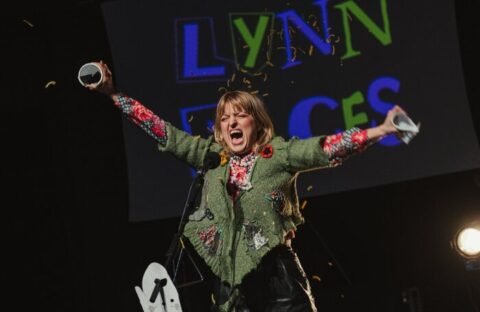
The Bendigo Writers Festival debacle highlighted how these divisions and our inability to navigate many currents of emotional intensity have left us unable to discuss the most pressing concerns of our time. Arts organisations are struggling to provide spaces where difficult conversations can take place, where disagreement is a natural part of the process of grappling with big ideas, and where people treat each other with dignity and humanity.
We now live in a world where everyone is either heartless genocide-apologist or a rabid antisemite. No one bothers to see that the person opposite them is also grappling with the ugly reality of watching mass death and destruction on our phones daily. We are too easily holding people accountable for the actions or crimes of others, and this has caused a major reshaping of the arts and culture industry — not only for Jewish artists, but for the sector as a whole.
David Slucki is the Director of Australian Centre for Jewish Civilisation and the Loti Smorgon Associate Professor in Contemporary Jewish Life and Culture at Monash University.
[ad_2]
Source link