
A champion remembered for proximity
Ricky Hatton’s appeal was never limited to the record book. Supporters travelled in numbers because he appeared to remain part of the crowd that celebrated him. The songs, humour, Manchester identity and willingness to speak plainly created a relationship that felt unusually close for an elite athlete.
That closeness also gave weight to his openness about mental-health difficulties. Physical courage, public success and popular affection did not make a person immune to depression, addiction or despair. When a fighter speaks about being overwhelmed, the admission challenges a culture that often treats endurance as the only acceptable response.
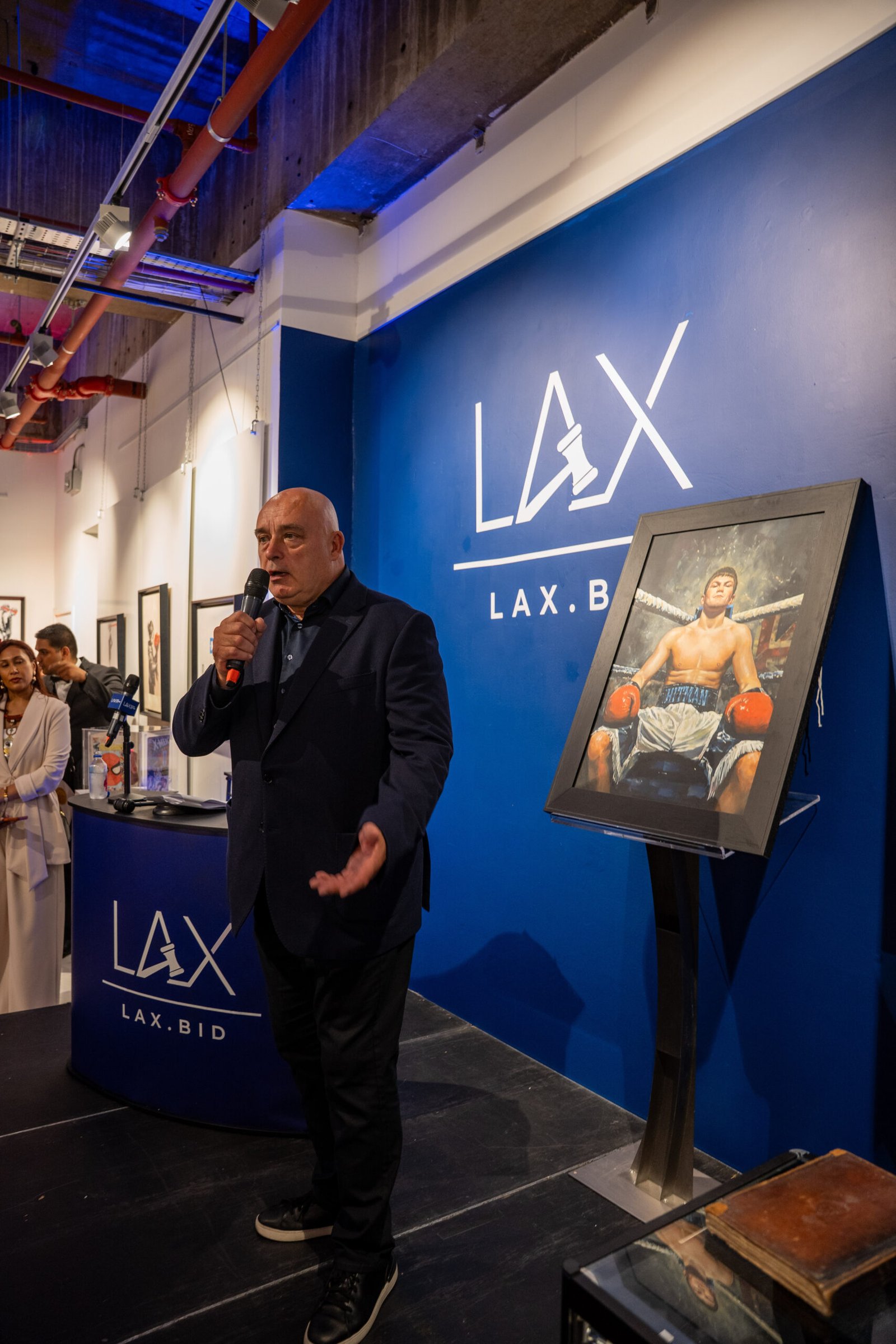
The LAX.BID launch placed that tension at the centre of its 18 June event. Mr Phantom’s tribute, The Hitman: Nobody Needs to Fight Alone, did not show a raised belt or a victorious punch. It showed a profile made from blocks and coming apart under words associated with pressure and silence.
The image refuses the easy memorial
Sporting tributes often freeze the subject at the moment of achievement. This portrait does something more difficult. It asks the viewer to consider the structure behind the public figure: expectations, exposure, responsibility and the private cost of being recognised everywhere.
The child climbing a ladder beneath the portrait gives the image a generational dimension. It can be read in relation to family, legacy and the work of reaching someone who has been placed on a pedestal. The ladder is not a symbol of effortless rescue. It requires another person to climb.
The picture therefore connects naturally to a Foundation built around support rather than admiration alone.
From memory to infrastructure
Public reporting following Hatton’s death described the Ricky Hatton Foundation as an attempt to carry his openness and community connection into practical work. Sport remains an important route because it can reach people who may not approach a formal mental-health service first.
A foundation cannot replace a person, and a tribute cannot resolve grief. What an organisation can do is create programmes, partnerships, conversations and access points that continue after the public attention moves on.
That distinction matters. Celebrity-linked causes can become trapped in memorial language, where every event repeats the same praise without showing what changed. The stronger legacy is measurable: people reached, conversations started, services funded, referrals made and communities supported.
Campbell Hatton and the pressure of inheritance
Campbell Hatton has carried a public relationship to his father’s name through boxing and family life. Media coverage around the LAX.BID event returned to the idea that Ricky would have been proud of his son.
The sentiment is understandable, but inheritance is complicated. A famous surname brings access, expectation and comparison. Carrying a foundation or public message can add another layer of responsibility to private grief.
The respectful approach is not to treat Campbell as a replacement spokesman for every aspect of his father’s life. It is to recognise that his participation and support can help the Foundation reach people while allowing him to define his own role.
Boxing can open a door that institutions cannot
Men who are reluctant to enter a clinical or charity setting may still enter a gym. Coaches, teammates and sporting communities can notice changes in behaviour, create routine and make conversation less formal.
Sport is not a substitute for qualified care, but it can be an early bridge. The Foundation’s connection to boxing gives it cultural credibility with people who understand the language of training, discipline and fighting through difficulty.
The challenge is to change one part of that language. Asking for help must not be treated as failing to endure. The phrase Nobody Needs to Fight Alone works because it respects the identity of the fighter while rejecting isolation.
The role of art in carrying the message
Mr Phantom’s artwork helped the legacy travel beyond boxing media. The Times included the image in a national news-in-pictures feature after the event, giving the portrait a second life outside the gallery.
Art can hold contradictions that a campaign slogan often flattens. The portrait is strong and broken, monumental and vulnerable, public and private. It allows the viewer to approach the subject through form before confronting the words.
For London Art Exchange, the work also demonstrates how artist representation, cultural storytelling and auction presentation can intersect. The company should be careful not to confuse visibility with value certainty. Mr Phantom’s previous public auction results and media attention are historical evidence, not a forecast for every work.
A cause-led auction needs transparent outcomes
The LAX.BID event supported Mind and included the Foundation in its visual identity. Any account of the evening should use approved charity wording and report financial outcomes only after verification.
If the tribute artwork was sold, donated, retained, or used to raise funds through another mechanism, the public record should make that clear. Supporters deserve to understand how the cause benefited.
The same principle applies to future events. A foundation relationship should follow a written scope, agreed messaging, and a plan for what happens after the night.
The legacy is ordinary work
The public remembers belts, entrances and great nights. Mental-health support is usually quieter: a conversation, appointment, coach, family member, peer group or person who notices that someone has disappeared from routine.
A foundation built around a famous name can attract attention to that ordinary work. Its credibility will depend on governance, partnerships and outcomes rather than sentiment alone.
LAX.BID’s launch gave the message a London stage and connected it to art, auction culture and a wider audience. The next step belongs to the Foundation, the charity partners and the people who choose to keep the conversation active when there are no cameras.
Still in his corner is an affectionate phrase. Its most useful meaning is practical: remain present, recognise the signs, and make sure a person does not have to prove strength by disappearing behind it.