[ad_1]
It’s notoriously difficult for emerging artists to make their name. Every year, thousands more art school hopefuls graduate into an increasingly strained and over-saturated ecosystem, one in which commercial galleries are struggling against tough market conditions and museums remain vulnerable to public funding cuts and the whims of private donors.
Despite this bleak outlook, plenty of new artists are managing to break through and get the attention they deserve. How? We spoke to top curators to get the inside scoop on how emerging talent can stand out from the crowd and take full advantage of rare opportunities to be seen.
The advice, outlined below, arose organically out of a broader conversation about what makes an artist “one to watch.” Leading curators who have worked independently, helmed international biennials, and developed the programs at major museums, reflected back over several decades spent trying to spot the next big thing.
Here are their top tips for how emerging artists can catch—and keep—a curator’s attention.
1. Be Proactive In Building Your Network
The first, and perhaps most daunting, hurdle to art world success is getting your work on the right people’s radars. Getting featured in a buzzy group show, for example. Until that point, it’s easy to feel trapped on the periphery of a wider network, impossibly far removed from the most advantageous connections. This may be frustrating but many ambitious artists are probably underestimating the value of rubbing shoulders with their peers.
Every curator interview for this story stressed that one of their primary sources for discovering new artists is… other artists. Hitomi Iwasaki is head of exhibitions at Queens Museum in New York, which has made supporting emerging talent a core part of its mission. “You can’t just sit in the studio and wait for someone to come and discover you,” she warned. “There’s no other way than going out, seeing things, and talking to peers to get recommended.”
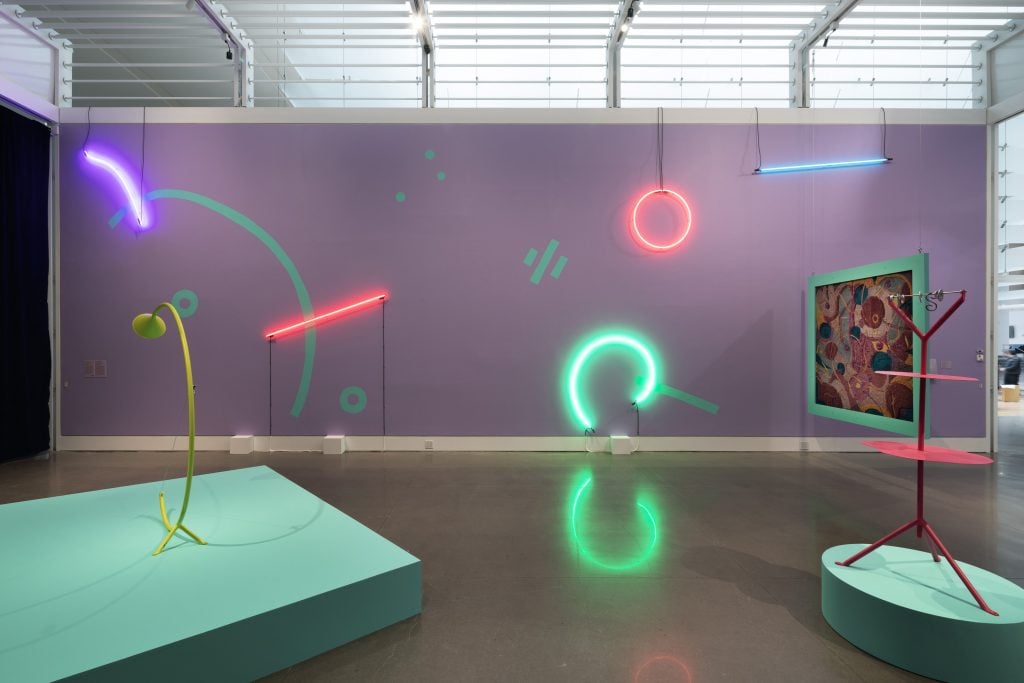
Installation view of “sonia louise davis: to reverberate tenderly” (2023/24). Photo: Hai Zhang. Courtesy of the artist and the Queens Museum.
Iwasaki also believes it could be unwise to overlook aspiring curators who might not yet have a lengthy resume. She herself often visits shows by the fellows of curatorial programs. “It’s curious to see what they include,” she explained. “They have a different vantage point, a different niche.”
Artists may also consider making the first move with more established curators. ”Sometimes people approach me, and that’s absolutely fine,” said Marie-Anne McQuay, curator of the current 13th Liverpool Biennial, on view through September 14. “The art world is tricky to navigate and very loaded, so artists don’t always know if it’s appropriate to reach out to someone. But that has happened and it has also come to fruition with projects or shows.”
Although artists without a gallery may feel on the back foot, many museums and curators are looking to build direct working relationships with artists that are not mediated by commercial interests. In her former role as artistic director of the Julia Stoschek Foundation in Germany, Lisa Long often worked with moving image and new media artists whose practices are not necessarily market-friendly. She recently founded Companion Culture, an organization which aims to provide a new model for “producing institutional-quality works outside of institutional structures” by serving as a strategic and curatorial partner between artists, institutions, brands, and patrons.
She hopes that more artists and art workers will seek alternative routes into the art world. “There’s much needed diversification of how we produce artworks and show artworks and collaborate,” she said. “In a time where resources are narrowing down, it’s important to find ways to share them and bring more players together.”
2. Present An Organized Online Portfolio
Long was reminded of the importance of networks during a recent trip to Tunisia. “Emerging talent is always very local,” she said. “I realized it was very difficult there to get a grasp of the scene and not everybody has a website.” As well as relying on word of mouth, she was able to tap into the scene by redownloading Instagram to learn about upcoming events, openings, and readings.
Curators agreed that, while meeting in person is always preferable, they depend on the internet to navigate an increasingly globalized art world. “I love hearing directly from the artist in any way I can,” said Nora Lawrence, executive director of Storm King Art Center, a 500-acre outdoor museum in New York’s Hudson Valley. She has two young children, which limits her ability to travel, but is a keen follower of art media and particularly enjoys reading interviews.

A woman looks at her laptop. Photo: Didem Mente/ Anadolu via Getty Images.
When searching out new talent online, however, an artist’s website is king. “I will go deep in whatever is available,” Lawrence said, noting that she always looks for an artist’s statement, press clippings, and a considerable number of artworks that have been clearly organized by year or series. “Whatever artists can do to make these things easily available is incredibly helpful,” she said. “As a curator, there are so many things that come my way that presenting something more than a press release helps me get to the meat of things in a world where there are so many competing priorities for time and attention.”
Echoing this sentiment, Iwasaki of the Queens Museum hopes to be given a sense of an artist’s development, even if they have only been working for a short period. “Artists should compose their portfolio so that you can see evidence of how the artist has evolved, and get a sense of what you can expect in the coming years,” she said. “We also want to see signs that the artist is aware of the context they exist in and of what’s happening out there in general. The signs manifest in different ways, but that’s what we look for.”
3. Have A Clear Message
“I pay attention to forms and ideas that frame the work as much as the histories and geographies the works align with,” agreed Bonaventure Soh Bejeng Ndikung, who is currently curating the 36th Bienal de São Paulo, opening September 6. He receives lots of portfolios and takes the time to review them all, even if he is not always able to respond.
An awareness of context and a strong, cohesive underlying message were both crucial. “What captures the moment?” is the guiding query for Long. “As a curator, I think about culture and society at large and how we can, as arts workers, create spaces in which people see themselves and imagine other ways of being,” she said. “I think about urgencies, and those aren’t necessarily my own, but my subjectivity plays a big role for sure.” Most curators have their own interests and ambitions beyond merely discovering compelling new art, so it makes sense to do research into their prior work before reaching out.

13th Liverpool Biennial exhibition titled “BEDROCK” installed at FACT Liverpool, 2025. Photo: Mark McNulty.
Recent discourse, including Dean Kissick’s widely-read polemic “The Painted Protest” from last fall, has railed against the centering of identity politics in much of today’s contemporary art. However, Long assures artists that their work does not need to be explicitly political to be considered by most curators. “But I do believe that artists make their work for a specific reason, and that reason may be urgent to them,” she said. “When I meet an artist, I can understand when they really believe in what they’re making and are fully behind it. That is something that I connect to very strongly.”
“You want to feel that someone is confident or committed to their practice,” agreed McQuay. “They might be in the process of working through something but, by working through it and presenting it, it would be a productive moment for them. I work in relationship to site, context, and installation, so am always thinking about artists who are at the right moment with the narrative of their work but also, with the right support, the physical realization.”
4. Don’t Forget Practicalities
Once you are in an ongoing conversation with a curator about a potential project, what are the common pitfalls that less experienced artists should aim to avoid?
At Queens Museum, Iwasaki oversees the biannual Jerome Foundation Fellowship, which offers $20,000, free studio space, and a solo exhibition to two artists who have not yet had solo gallery shows or received major grants. Applications are made via open call. “If your proposal sucks, even if you have content and talent, that’s where you stop,” said Iwasaki. As well as a comprehensive C.V. and an interesting concept, she wants to see evidence that the artist has considered questions around budgeting and a realistic working timeline. “I know it’s a lot to ask from an artist but I think it is a requirement for an artist nowadays,” she said. “Even if they have to consult a bunch of other people, you have to do that.”

Heather Hart’s The Oracle at Lacuna (2018). Courtesy the artist and Storm King Art Center.
At Storm King, curator Lawrence supports the production and installation of monumental public pieces. For many participating artists, it is their first time breaking into a new medium, scale, or context. In early conversations, Lawrence must establish whether an artist is able to take on a project that may be particularly time and work intensive.
It is important, therefore, for artists to be honest about their enthusiasm for new opportunities, as well as any other commitments they may have that could complicate timelines or reduce the time and attention they can dedicate to the project. “Occasionally you’ll find someone who jumps at the opportunity but then you start talking about practicalities or materials or things like that and they might need to think about them a bit more,” Lawrence said.
5. Flexibility Is Key
“When things go really well, what comes out in the conversation is an affinity for the type of experimentation that is required to create work within a landscape,” Lawrence added. “There’s always something new, always something unexpected, and the projects are going to be that much stronger if the artist is interested in doing that.”
When curator’s take a leap of faith by commissioning work from a new artist, they are inviting that artist into a collaborative process that will likely require some curiosity and flexibility. Lawrence feels most encouraged when artists have already given thought to considerations like what kind of base a work might need, its durability, or how it is going to look in situ. “That’s not how I judge talent but it is helpful to have people already thinking about these things,” she said. “It can be incredibly helpful to be open to alternatives in terms of location, materials used, scale.”
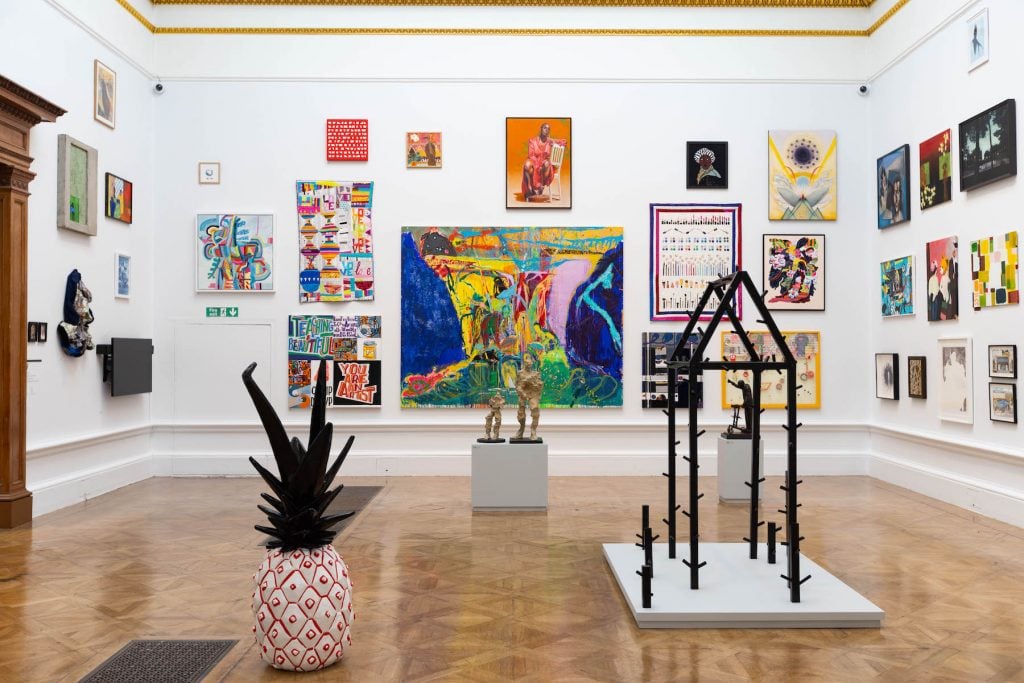
Gallery view the Royal Academy’s Summer Exhibition 2021. Photo: © David Parry/ Royal Academy of Arts.
This sentiment was echoed by other curators. Long, of the Julia Stoschek Foundation, looks to work with artists “who are interested in feedback, in that back and forth. With young, emerging artists, often there’s things that can still be learned from even how exhibitions are installed.”
“It’s always a blessing to work with artists–emerging or not– who are grounded and willing to understand the bigger picture,” said Ndikung. He listed egos among budget and concept as key challenges for any project.
[ad_2]
Source link