
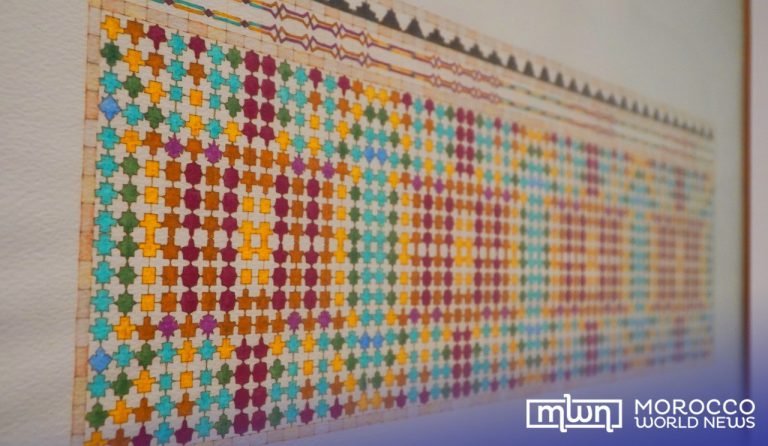
Rabat – The Ministry of Youth, Culture, and Communication officially launched on Friday in Salé a project to nominate the traditional zellige art of Fez and Tetouan for inclusion on UNESCO’s Representative List of the Intangible Cultural Heritage of Humanity.
Unveiled during a dedicated study day, the initiative reflects Morocco’s commitment to preserving this centuries-old craft, ensuring its transmission to future generations, and enhancing its recognition both nationally and internationally.
Minister Mohamed Mehdi Bensaid emphasized the significance of the project, describing it as a key step toward international recognition of an art form that has adorned Morocco’s most iconic architectural masterpieces for centuries. “Zellige is more than a decorative element; it embodies identity, memory, and a craft passed from master to apprentice, guided by tradition and a constant pursuit of excellence,” he said.
The minister highlighted the efforts made to safeguard this heritage through inventory, documentation, and legal protection of the associated skills and techniques under the national “heritage label.” He also noted the growing interest in Moroccan zellige, both domestically and abroad, underscoring its place at the heart of the nation’s cultural identity.
Othmane El Absi, director of the Heritage Center in Tétouan, recalled that efforts to secure UNESCO recognition for Moroccan zellige—particularly that of Tetouan—have been ongoing for more than three decades.
Read also: Moroccan Zellige: Algeria Escalates Cultural Appropriation of Morocco’s Heritage
He traced the craft’s origins to pre-Almoravid times, with the earliest remnants discovered in Aghmat, the dynasty’s first capital. El Absi highlighted the distinctive characteristics of Tetouan zellige, influenced by Moroccan, Arab, and Andalusian traditions, with variations in shape, color, and pattern composition.
Mouhcine El Idrissi El Omari, a researcher at Hassan II University in Casablanca, pointed out that Fez zellige is among the oldest decorative architectural elements in Morocco, dating back to the 13th century. He cited examples such as the minaret of the Seffarine Madrasa and the Fes Jedid Grand Mosque, noting how the art has evolved over centuries while maintaining its traditional essence.
The launch coincided with the opening of the exhibition “Moroccan Zellige: A Historical Heritage and a Living Tradition,” showcasing works by Moroccan artisans.
The exhibition highlights the evolution of zellige from its historical architectural origins to contemporary designs, celebrating both authenticity and renewed creativity.