[ad_1]
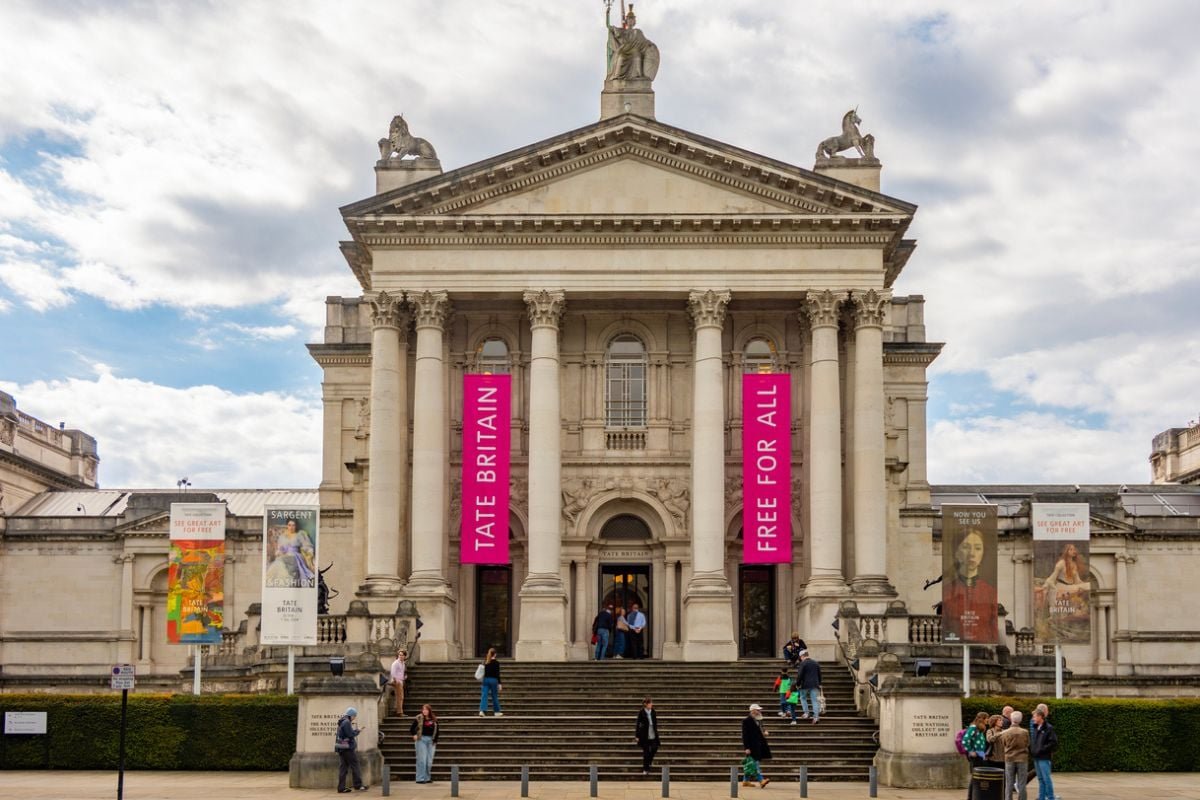
Two national planning societies have raised concerns that plans to overhaul the outdoor space around Tate Britain’s Millbank entrance could cause harm to the setting of the gallery building.
The proposals, currently awaiting permission from Westminster City Council, include plans by architecture firm Feilden Fowles for a “comprehensive redesign” focused on “softening” the gallery’s external appearance.
The transformation would create a Mediterranean-inspired garden and a new natural pond to the south.
The project also includes a water feature, an event space, and expanded outdoor café seating, as well as a timber-framed, stone-clad “garden classroom” situated between the Tate Lodge and Clore Gallery, providing a new learning space for schools, community groups, and volunteers.
A taxi rank to the front of the building will be moved to Atterbury Street, while the Grade II-listed railings ill be repositioned and other sections of the existing railings moved forward.
Despite broadly supporting “the principle of improving Tate Britain’s gardens” and the garden classroom, the Victorian Society has expressed concern that the new landscaping will cause “unacceptable harm to the setting of the gallery building”.
The group’s objections centre on the scale of the planting, which it claims risks “undermining the architectural integrity” of the building with “excessive foliage” and “off-centre features”.
Historic Buildings and Places also voiced reservations, specifically objecting to plans to plant a walnut tree to the front of the building, disrupting its symmetry.
‘Manky and awful’
The Victorian Society also raised questions about the rationale behind the scheme, noting recent comments by the Tate’s Chair, Roland Rudd, which it said “suggests a desire to conceal aspects of the building”.
In June, Rudd told The Times: “At the moment, let’s be honest, when you go to Tate Britain, it is awful. You have got these rows of bushes [at the front], and they look very old, they look manky. People tend to relieve themselves behind them.
“And that café at the bottom is dreadful … it has an awful backdrop.”
Supporters of the plans, including Westminster City Council and Historic England, have said the proposals, which the council’s Licensing Committee will review on 30 September, will result in significant public benefits.
In 2024 around 1.2 million people visited Tate Britain, which features British art from 1500 to the present day, around a third lower than in 2019.
Tate director, Maria Balshaw, has previously suggested that comparisons of visitor numbers to the last full year before the Covid pandemic are unfair as it was the gallery’s most visited year in its 128 year history.
Earlier this year, Tate, which operates a network of four galleries, unveiled a campaign to raise £150 million by 2030 to support its exhibition programme and research.
The move came after Tate’s annual report, published earlier this year, revealed that government has pledged to keep the organisation afloat as it attempts to move to “a new financially sustainable business model” while operating a deficit budget for the current financial year. As part of these measures, Tate recently reduced its overall staffing numbers by 7%.
[ad_2]
Source link