
[ad_1]
An international team of researchers has unearthed in Ndalambiri (Angola) an archaeological sequence spanning from over 45,000 years ago to the 19th century, including the oldest and most reliable evidence of iron production in the country, dated at least to the 5th century AD.
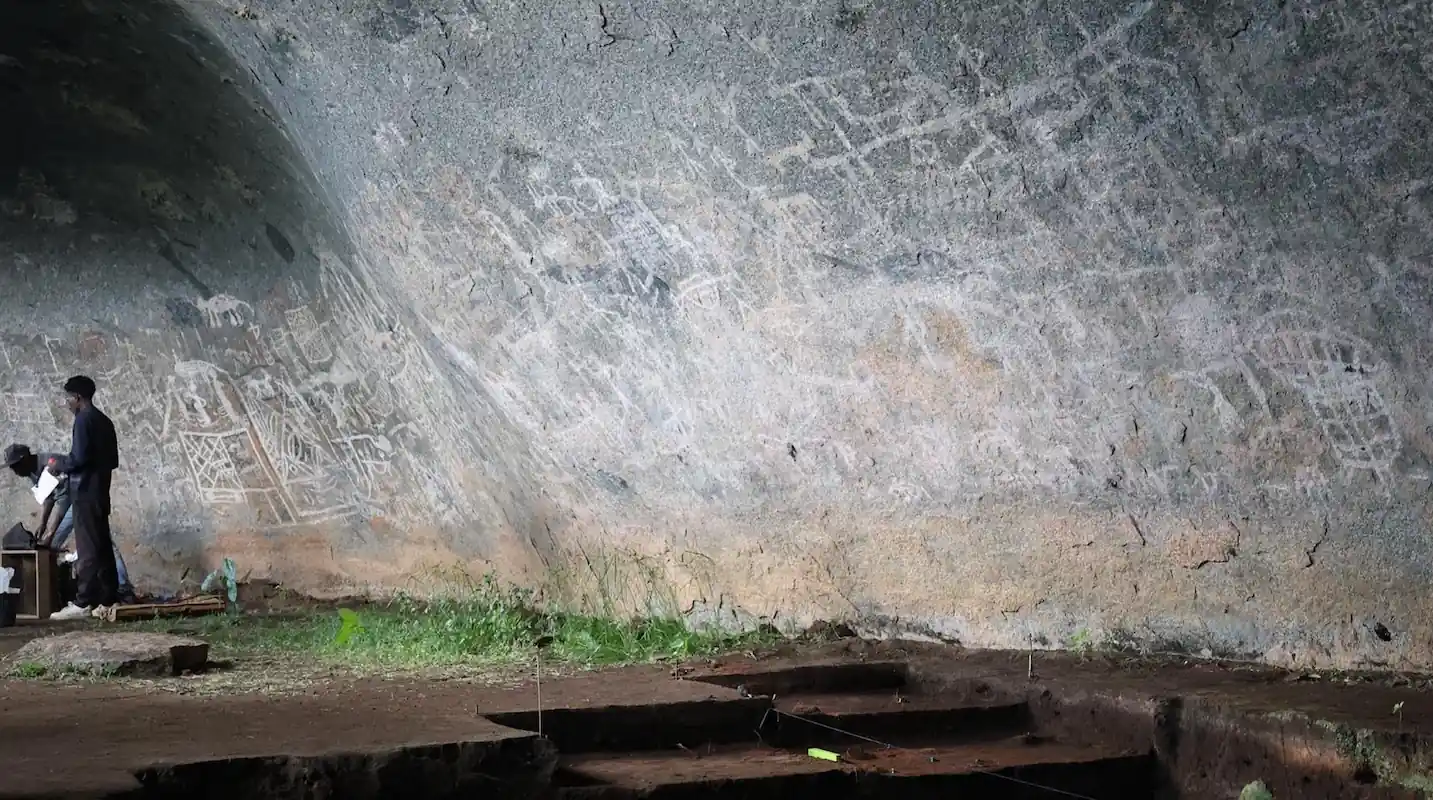
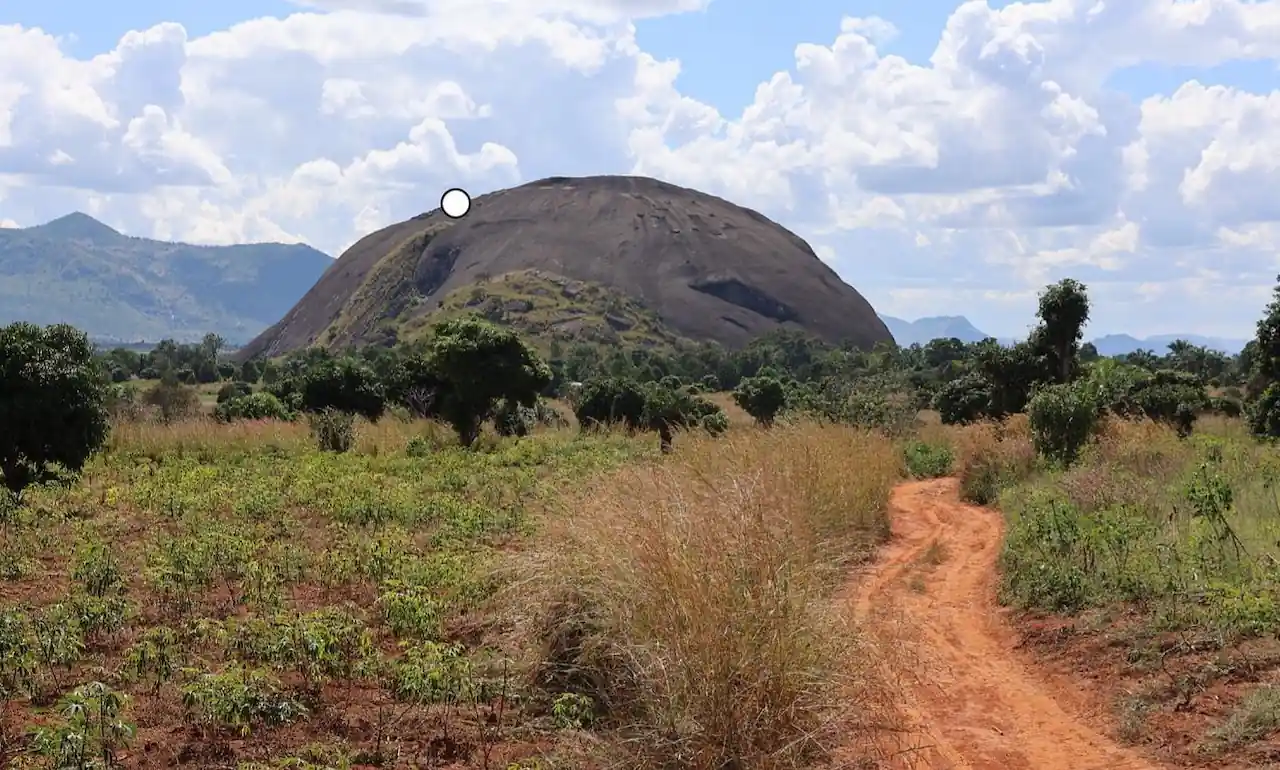
The rock shelter of Ndalambiri, declared a National Heritage Site of Angola in 1974, is known for its large painted frieze over 60 meters long that contains nearly 1,200 figures, mainly white, red, and black, with a significant number of anthropomorphic and geometric representations. However, until now very little was known about who made these paintings, when they were made, and which peoples inhabited this place over time.
The excavations led by Isis Mesfin, of the National Museum of Natural History in Paris, in collaboration with the National Museum of Archaeology of Benguela and the Higher Institute of Educational Sciences of Sumbe, have completely changed this outlook. The fieldwork, which also served as a training school for Angolan students, uncovered a stratigraphic sequence 2.5 meters deep, composed of 15 archaeological units or layers and 15 human-made structures, such as hearths and pits.
Researchers have been able to divide the long history of occupation of Ndalambiri into three major periods. A Stone Age phase, earlier than 16,000 years ago, documented in the deepest levels of the excavation. In these strata, more than a thousand stone tools made mainly of quartz have been recovered, including small blades and microlithic cores.
Two radiocarbon dates place the earliest human occupation of the shelter between more than 45,000 years ago and about 16,000 years ago. The researchers note, however, that these oldest levels appear “redeposited and altered,” probably due to their proximity to the rock wall and episodes of flooding.
An Early Iron Age phase, beginning in the 5th century AD and extending to approximately the 8th century. It is in these levels where the most reliable evidence of iron production in Angola has been found, dating back at least to the 5th century AD.
And a Late Iron Age phase, spanning from at least the 11th century to the 19th century, already including the earliest moments of the colonial period. In these levels, much richer in archaeological remains, numerous ceramic fragments, iron tools, forge slag, remains of domestic and wild fauna, and a significant number of stone tools have been recovered.
The Oldest Iron Production in Angola
One of the most relevant findings of the study is, without a doubt, the evidence of iron production in levels dated to the 5th century AD. Archaeologists have recovered in the site’s ancient sequence thirty fragments of iron slag, three tuyère fragments (the conduits through which air was blown into the forges), 200 grams of hammer scales, three finished iron objects, and three pieces of iron ore.
The only iron production structure found in situ consists of a small oval furnace dug into the ground, which contained combustion remains, tuyères, slag, and a significant amount of charcoal. The analysis of these remains indicates that in Ndalambiri mainly forging work was carried out, that is, the transformation of already smelted iron into small objects such as adzes, blades, or chisels.
This finding is especially relevant because it places Angola on the map of the expansion of iron metallurgy in central and southern Africa. The authors note that this chronology is similar to that documented in the Okavango region, on the border between Namibia and Angola, and slightly later than the first evidence of iron production in South Africa (3rd century AD) or in the Democratic Republic of the Congo (2nd–1st centuries BC).
The Painted Frieze: A New Dimension with 3D Technology
One of the most innovative contributions of the project is the creation of the first 3D model of a rock art site in Angola. The researchers took 1,050 photographs of the shelter and its paintings, 1,038 of which could be correctly aligned to generate a high-resolution three-dimensional model.
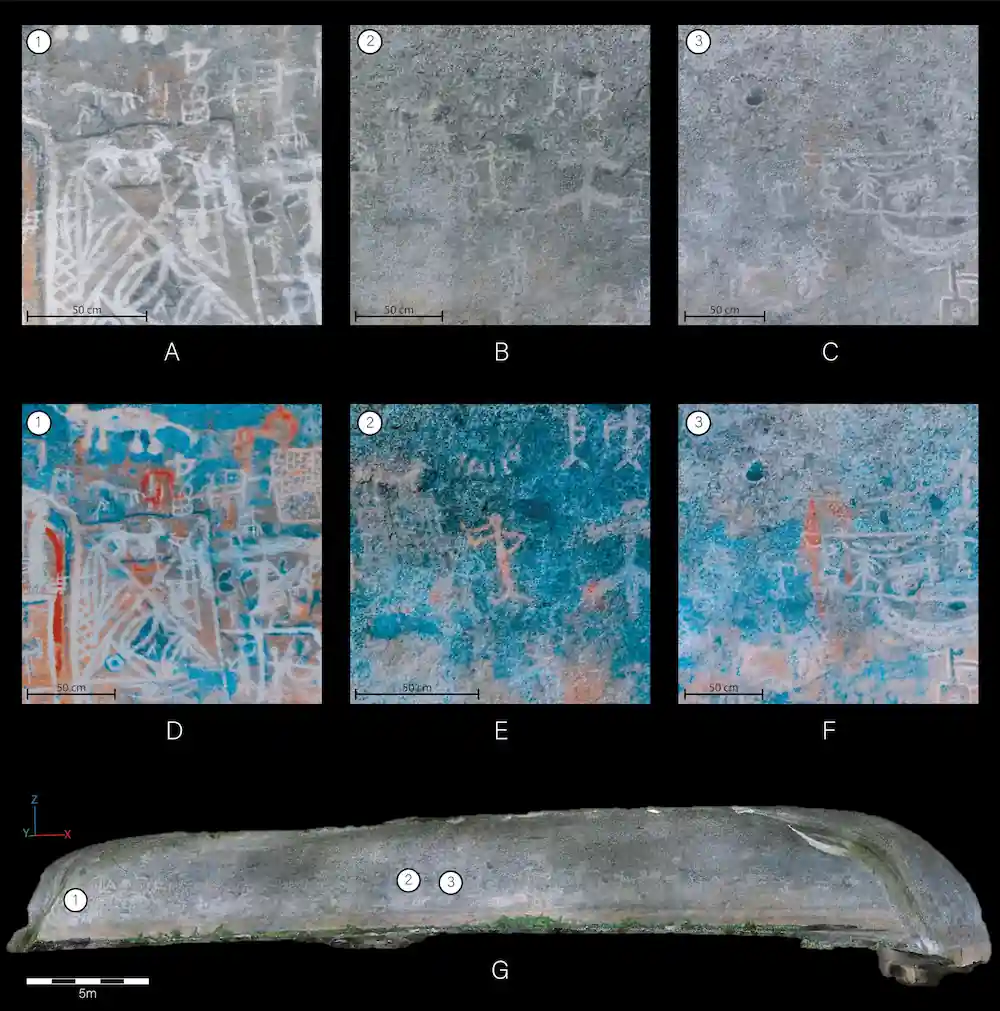
The model, available on the website of the National Museum of Archaeology of Benguela, has submillimetric precision, with GSD (Ground Sampling Distance) values between 0.879 and 0.72 millimeters per pixel. This allows not only documenting the state of conservation of the paintings (many of which are deteriorated by the tropical climate, wall flaking, and animal activity) but also monitoring their evolution and planning future restorations.
The frieze, over 60 meters long, contains 1,196 painted figures, most in white (1,178), followed by black (80), red (62), orange (33), brown (7), and yellow (3). Anthropomorphic figures are the most common (443 figures), followed by zoomorphic ones (152), “complex” geometric shapes (137), and “simple” ones (100).
Previous studies had identified four painting phases in the Ebo region. Three of them are present in Ndalambiri, with the two most recent ones being post-European contact (from the 15th century onward). A direct radiocarbon date on a painting made with charcoal (figure number 1136, belonging to the so-called “Phase III”) yielded an age between 1669 and after 1950 AD, which matches the iconography suggesting a colonial context.
The authors note, however, that it is still a challenge to know whether the ‘Phase II’ paintings can be linked to the Iron Age stratigraphy or not, and they do not rule out that there could be older paintings, dating back more than 2,000 years, buried under the over 2 meters of sediment accumulated in the last two millennia.
The Mystery of Who Painted and Inhabited Ndalambiri
Despite the richness of the findings, the researchers are cautious when attributing the paintings or occupations to specific cultural groups. The article notes that due to the limited regional context and based on the archaeological association of quartz microlithism, ceramics, and iron technologies, the identity of Ndalambiri’s occupants and painters remains uncertain.
The archaeological record of Ndalambiri, they add, rather supports a complex population scenario in Angola during the Iron Age, reflecting diverse orientations of cultural influences and interactions. This statement is important because it challenges the simplistic models of Bantu expansion that have often been applied to the region.
The researchers also highlight the persistence of stone tool technologies of hunter-gatherer tradition long after the introduction of ceramics, metallurgy, and livestock. This combination of technologies (microlithic quartz, ceramics, and iron) is uncommon in Atlantic central Africa north of Ndalambiri but more closely resembles that documented at sites in southern Africa, where stone tool traditions continued until very recent times, associated with ceramics, domestic animals, and sometimes iron production.
The researchers conclude that Ndalambiri is currently the best-documented excavation and the longest sequence located along a fundamental north-south axis to document the southern expansion route of Bantu-speaking populations, as well as the exchanges and diffusion of late Holocene innovations such as ceramics, livestock, iron, or agriculture between central and southern Africa.
SOURCES
Isis Mesfin, Peter Reid Coutros et al., A new archaeological chrono-cultural sequence for the rock art site of Ndalambiri, Cuanza Sul, Angola. Journal of Archaeological Science: Reports, Vol. 73, doi.org/10.1016/j.jasrep.2026.105805
[ad_2]
Source link