[ad_1]
At the 2026 Venice Biennale, Merike Estna transforms the Estonian pavilion into an open studio, inviting visitors to watch painting unfold as labour, care and performance.
When visitors step into Estonia’s pavilion at the 61st Venice Biennale, they will not find painting in its most familiar form: finished, framed and fixed. Instead, they will find an artist at work.
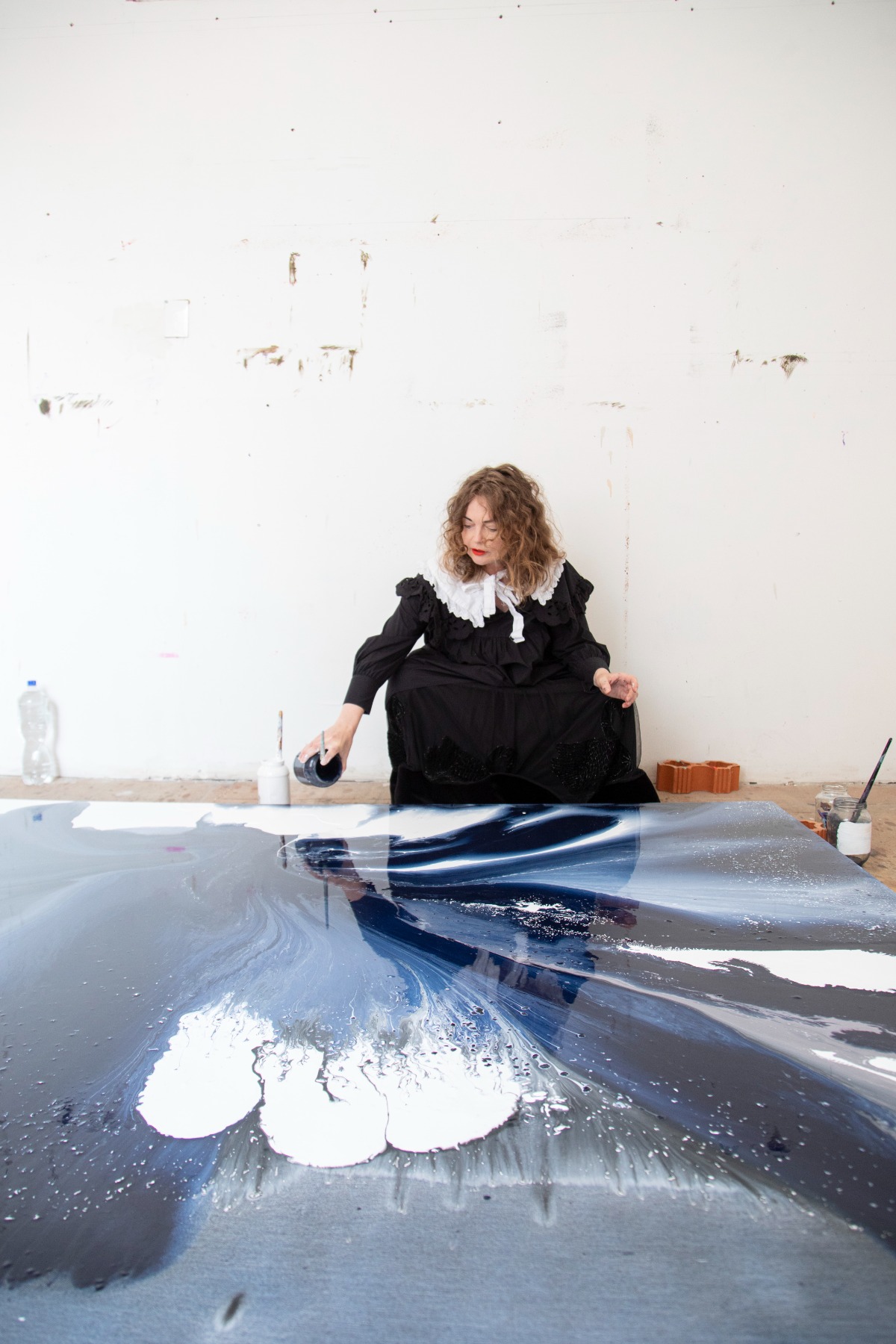
Merike Estna, one of Estonia’s most distinctive contemporary painters, represents the country with The House of the Leaking Sky, an exhibition that unfolds over the course of the biennale. Beginning with blank canvases, Estna paints in public, allowing the works to emerge before visitors’ eyes over several months.
“I believe that a painting is at its most alive at the moment of its birth – and that is exactly what I want to show in Venice,” Estna has said.
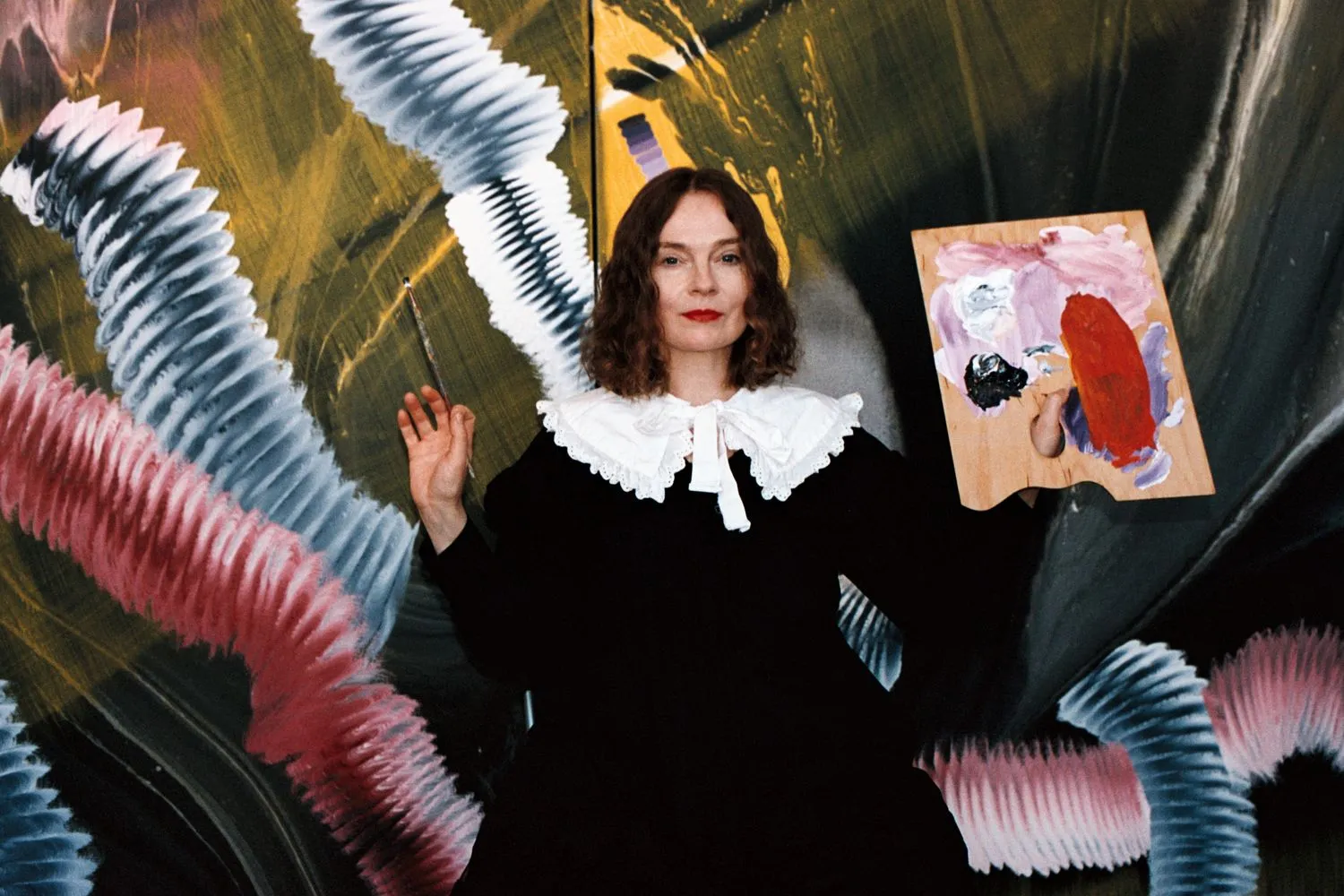
The gesture quietly challenges the usual rhythm of major exhibitions, where art often arrives polished, complete and ready for consumption. Estna instead places process, presence and repetition at the centre. Painting becomes not only an object to be viewed, but an act taking place in real time.
A former church turned open studio
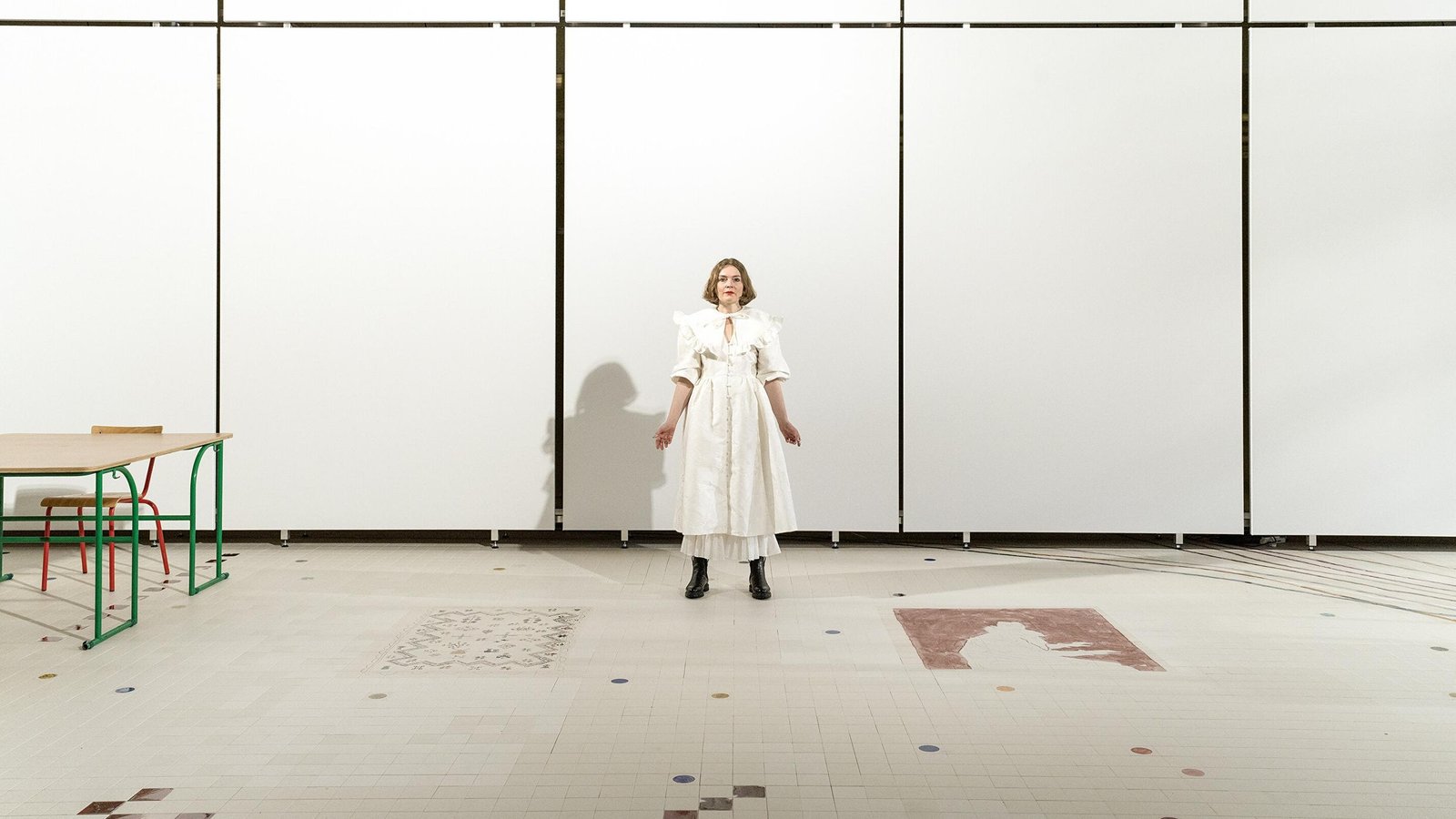
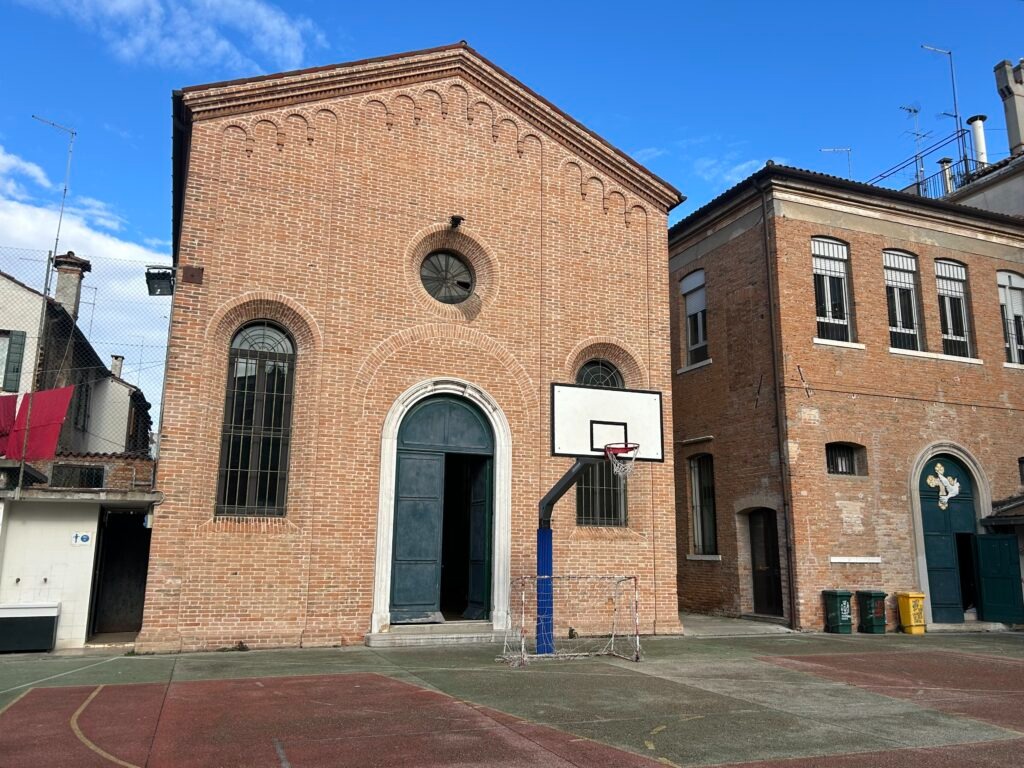
The Estonian pavilion is located at Calle San Domenico 1285, close to the Giardini, in a building originally constructed as a church and now used as a community centre. Its frescoed ceiling – an inverted sky of sorts – looks down on a floor marked by the lines of a basketball court, bringing the sacred and the everyday into immediate contact.
For the exhibition, the entire floor has been covered with more than 25,000 glazed ceramic tiles. Across this surface, Estna weaves together references to art history, Estonian folk culture and her own visual language. Some tiles honour well-known women artists; others carry vessels suggesting the pregnant body or allude to creation myths from Estonian folklore.
According to Maria Arusoo, commissioner of the Estonian pavilion, Estna’s blank canvas also pays tribute to historical women artists whose works were never written into the artistic canon. The question of who is remembered – and who is left out – runs through the exhibition like a fault line.
Against the myth of the solitary genius
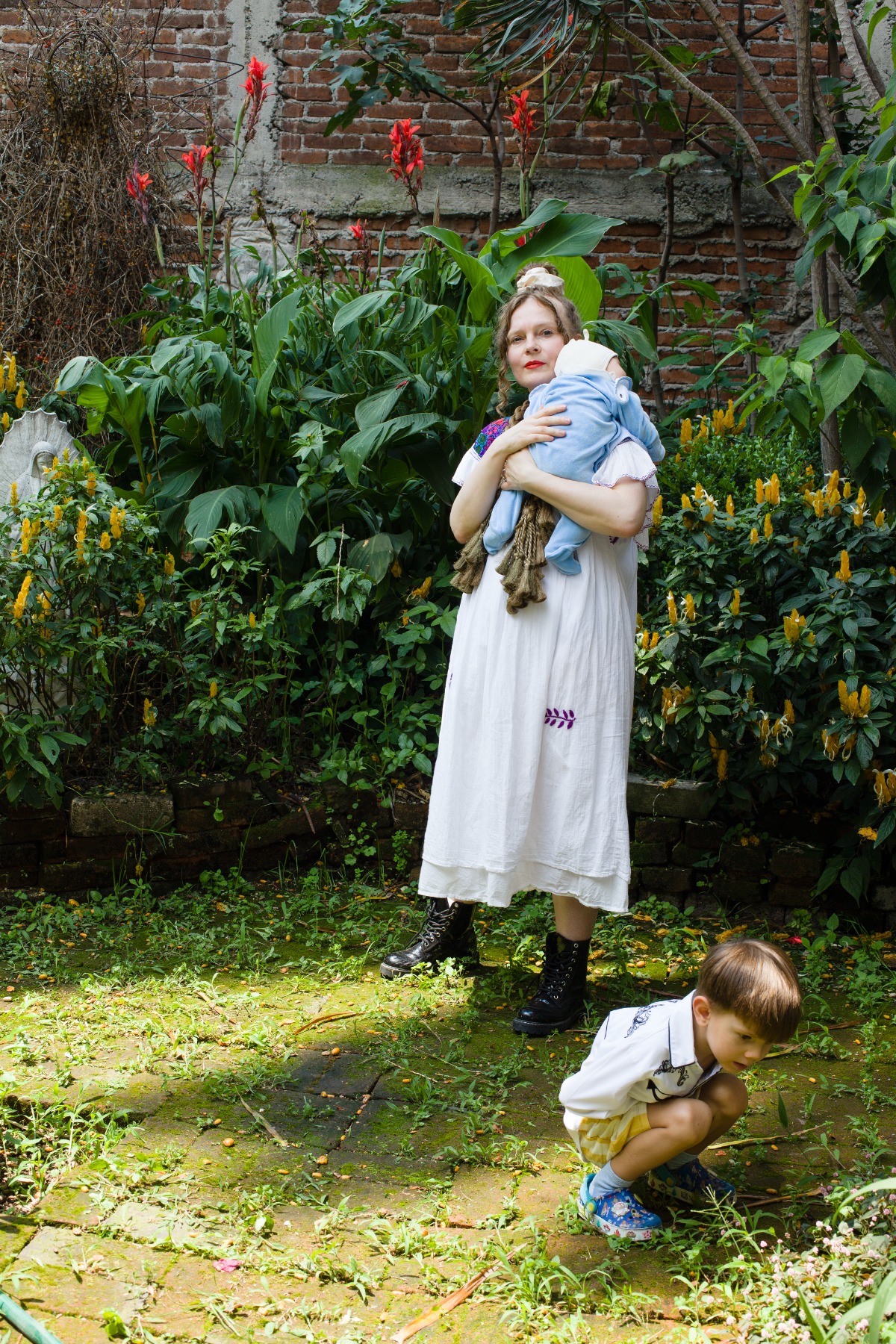
Estna has moved to Venice for the duration of the biennale with her family and two young children, painting in the pavilion from Wednesday to Sunday. This is more than a logistical detail. It is central to the exhibition’s argument.
By bringing together the labour of the artist and the labour of motherhood, The House of the Leaking Sky challenges the enduring myth of the solitary genius, supposedly untouched by ordinary life. Estna proposes something more porous and human: art not as escape from life, but as something that leaks into it.
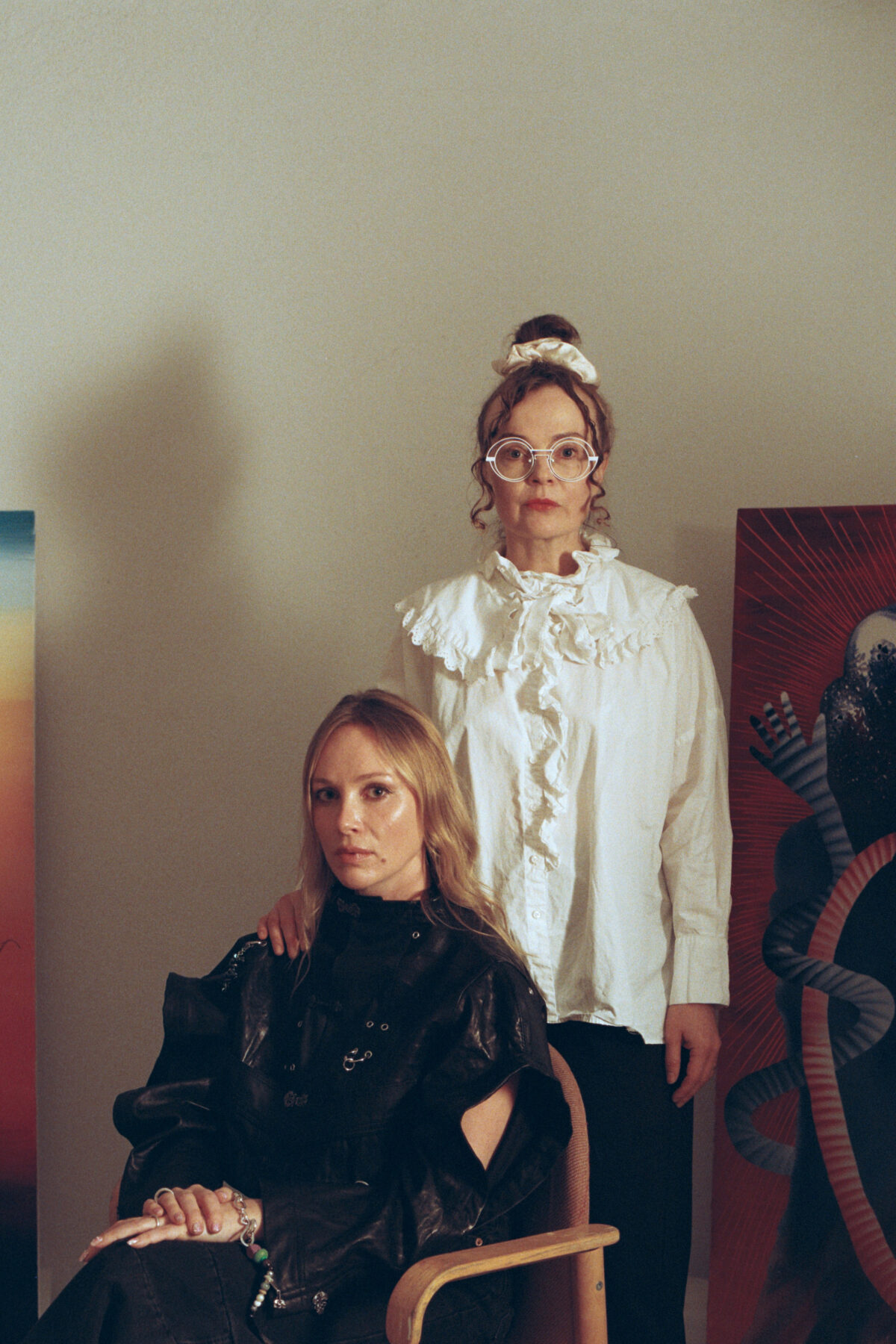
Curated by Natalia Sielewicz, chief curator at the Museum of Modern Art in Warsaw, the exhibition continues Estna’s long-standing interest in dissolving the boundaries between art and care, the sublime and the everyday. Her use of craft practices also pushes back against hierarchies that have historically placed forms associated with women, decoration and domestic labour on the margins of painting.
Here, painting becomes a social space – a place where overlooked histories, bodies and forms of work can return.
Estonia’s 15th Venice presentation
Estonia has participated in the Venice Biennale since 1997, and the 2026 pavilion marks the country’s 15th presentation. Its participation is organised by the Estonian Centre for Contemporary Art and funded by the country’s culture ministry.
Estna, born in 1980, lives and works between Tallinn and Mexico City. She studied painting at the Estonian Academy of Arts and completed an MFA at Goldsmiths, University of London. She has received several Estonian art awards, including the Hansabank Scholarship, the Eduard Wiiralt Scholarship and the Konrad Mägi Award. From 2017 to 2023, she was associate professor in the painting department at the Estonian Academy of Arts, and since 2025 she has been professor of contemporary art.
Her selection followed an open competition that drew 25 applications and was assessed by an international jury, which praised the maturity and force of Estna’s work, as well as her approach to painting as a medium for political, social and artistic inquiry.
The art of becoming
In a biennale culture often driven by spectacle and instant recognition, Estna offers something slower: duration. The pavilion will not be the same in May as it is in August. The paintings will gather time, gesture, public attention and the visible evidence of work.
At its most compelling, The House of the Leaking Sky suggests that painting is not an old medium awaiting revival, but a living one still capable of surprise. It can seep beyond the canvas, across the floor, into history and into the ordinary labour of care.
Perhaps Estna’s strongest proposition in Venice is this: art is not most alive when it is complete, but when it is still becoming.
[ad_2]
Source link