[ad_1]
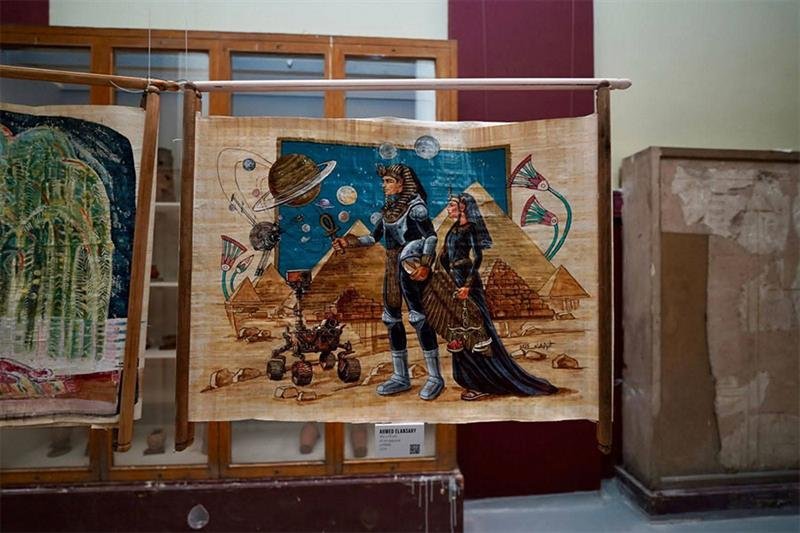
“From Green Papyrus to Eternal Art,” organized by the International Art for Development Forum, features nearly 70 Egyptian and Arab artists whose works show how heritage can inspire sustainable creativity and support economic opportunities.
Randa Fouad, founder and president of the forum, said the initiative reflects a broader cultural effort to revive papyrus as a material and a meaning.

In her remarks, she described the project as a response to a noticeable decline in papyrus cultivation in the village of Qaramous in Sharqiya, where farmland dedicated to the plant has shrunk from 100 feddans to around 10.
She argued that papyrus revival is “not purely a cultural concern, but an ecological and economic imperative,” capable of supporting creative industries and offering artists a low-cost alternative to traditional canvas.
Several prominent cultural figures and museum officials took part in the opening ceremony.
Director of the Egyptian Museum Dr. Ali Abdel-Halim welcomed the exhibition’s presence in a venue historically tied to papyrus and ancient Egyptian civilization.
Actress and artist Dalia El-Beheiry, ambassador of the initiative, stressed the power of cultural diplomacy and soft power in shaping awareness around environmental and heritage issues.

UNESCO Regional Director Dr. Nuria Sanz described the exhibition as a meaningful contribution to heritage protection and environmental sustainability, while Dr. Ahmed Ghoneim, CEO of the Grand Egyptian Museum, spoke about museums as custodians of artistic continuity.
Secretary-General of the Supreme Council of Antiquities Dr. Mohamed Ismail noted art’s enduring role in documenting civilization.
The exhibition has drawn an array of public figures, including former UNODC Executive Director Ghada Waly, who joined artists and attendees on a tour of the galleries.
Visitors encountered contemporary artworks placed alongside pharaonic artifacts, creating a striking visual dialogue between modern expression and millennia-old aesthetics.

A particularly notable feature is the museum’s second-longest preserved papyrus, presented as a symbol of “artistic sustainability” at the heart of the show.
Fouad underscored that the initiative aims to link heritage preservation with economic empowerment.
Papyrus, she said, can support farmers, artisans, and artists, while also serving as a local, affordable, and sustainable medium that activates Egypt’s creative economy.
“Creativity has always been part of this country’s DNA,” she said. “We want to show that heritage is not just a legacy; it can be a driver of development.”

The evening included the announcement of winners of a papyrus painting competition, followed by a tour and an outdoor reception.
Organizers say the exhibition is designed not only to showcase artistic talent but also to spark conversations about environmental challenges and the future of heritage-based industries.
The exhibition runs until 6 December and will host delegations from cultural institutions, international organizations, and diplomatic missions.

A global tour is planned for 2026, with organizers hoping to draw international attention to the artistic, ecological, and economic value of reviving papyrus cultivation in Egypt.
By placing contemporary papyrus works alongside ancient artifacts, the exhibition challenges conventional boundaries between past and present and positions art as a tool for sustainable development and cultural renewal.
Follow us on:

Short link:
[ad_2]
Source link