Art Investment

European-American investment company to buy Artnet and take it private

[ad_1]

Beowolff Capital Management Ltd, an investment company founded by ex-Goldman Sachs partner Andrew Wolff, has acquired 65% of the shares in the online data company Artnet. The investment company already owns a majority stake in Artsy and aims to create a “portfolio of market-leading companies to enhance scale and drive collaboration and profitability,” according to a press release.

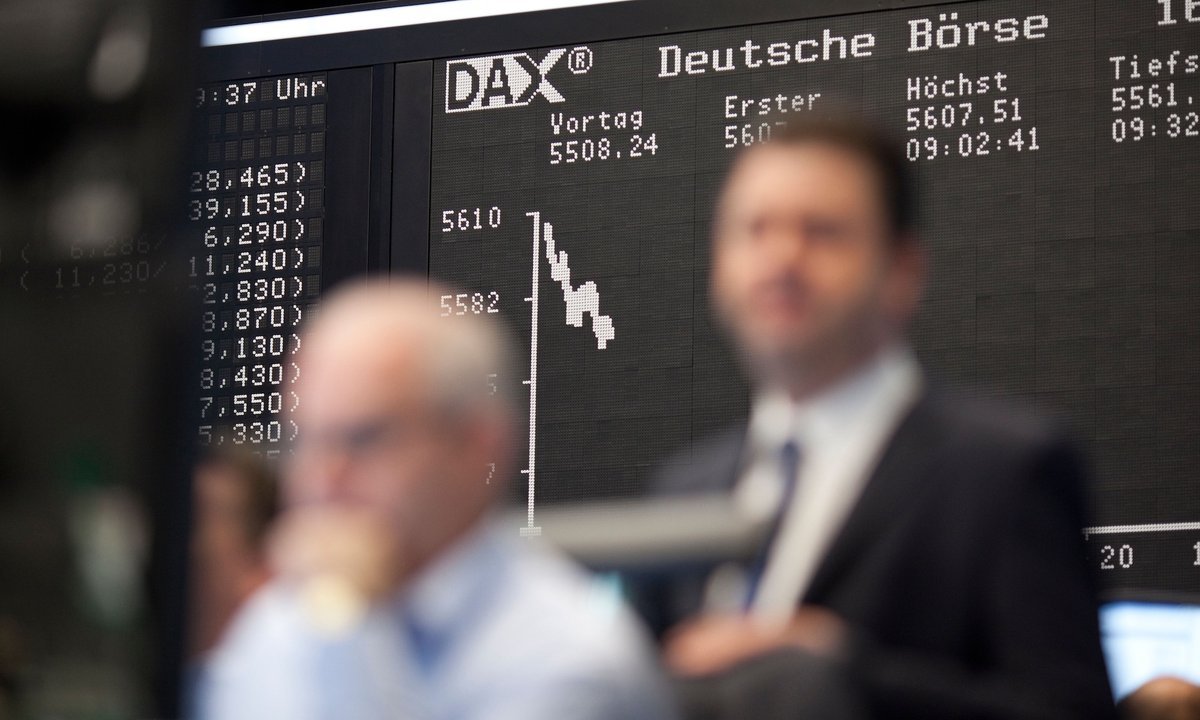
The voluntary takeover offer values Artnet at around €65m, at €11.25 per share. When completed, the deal will take the company private. Currently a publicly-quoted company on the German stock exchange, Artnet was founded in 1989 by Hans Neuendorf, who retired earlier this year; its chief executive is his son-in-law Jacob Pabst, one of multiple Neuendorf family members employed by the company.

Crucial to the transaction was the acquisition of shares from the German shareholder Rüdiger Weng, who held just under 30%, representing slightly over 1.7 million shares.

“We are receiving about €20m, it is a wonderful deal, it helps in the current weak art market – we are now cash rich,” Weng told The Art Newspaper. A long-time critic of the management of Artnet, Weng added he has “exited for now, but will come back later as a shareholder”.

Weng said that Wolff would be combining Artnet and Artsy and might acquire more; “In order to monetise these companies, you need a bigger structure”, he says.

Jan Petzel, chief investment officer of Beowolff Capital, said in a statement: “Artnet represents a compelling opportunity that aligns perfectly with our goal of building an interconnected art market. The strength of the Artnet brand and scale of its global reach are significant, and we intend to further develop and enhance its value proposition.”

Claiming 67 million unique users annually, Artnet is the largest global platform for fine art, notably its price database, which tracks international auction results going back decades. As for Artsy, it claims 600,000 registered users and 2.5 million monthly visits; both sites offer editorial content and reports on the art market as well as art for sale. Launched with the intention of being the “Amazon of the art world,” according to founder Carter Cleveland, Artsy initially attracted $50m in early funding from investors such as Larry Gagosian, Wendi Deng Murdoch and Dasha Zhukova.

“We are thrilled to be partnering with Beowolff Capital on this exciting next phase of growth,” said Artsy chief executive Jeffrey Yin. “We look forward to continuing to support our partners and collectors as we invest in products that make it easier than ever to discover and buy works of art.”

[ad_2]

Source link

Shares:

Related Posts

Art Investment

Qatar hosting of Art Basel event ‘confirms success in cultural, artistic investment’

[ad_1]  Art Basel Qatar yesterday opened to the public and will run until Saturday at various locations within Msheireb Downtown Doha, including the M7 building and the Doha Design District, as well as other venues in the area. The exhibition, organised in partnership with Qatar Sports Investments (QSI) and QC+, takes place across Msheireb Downtown Doha and runs through February 7. Artistic Director of Art Basel Qatar and the Doha of Fire Station: Artist in Residence, artist Wael Shawky affirmed in a statement to Qatar News Agency (QNA) that Qatar’s hosting of the first edition of Art Basel Qatar clearly confirms the country’s success in investing in the cultural and artistic sector, reflecting the clarity of vision that the State possesses in this field. He noted that this MENASA edition (Middle East, North Africa, and South Asia), hosted by Qatar, marks a significant turning point in the art world, given the importance of art in societies and its vast and widespread market. He explained that alongside the main exhibitions, which feature works by 84 artists from 31 countries and 87 prestigious galleries, the fair will showcase a unique Special Projects programme. A programme including wide-ranging series of nine large-scale, site-specific sculptures, installations, and live performances, is distributed across key cultural landmarks and public spaces in Msheireb Downtown Doha.Shawky pointed out that, through preparations for its Arab edition, Art Basel Qatar has enabled a number of galleries to present a single artist’s work, whether from the Arab world, Asia, or Arab artists living across different parts of the world. This approach aims to create integration among participating galleries on artistic, intellectual, and conceptual levels, an initiative taking place for the first time. As a result, concerted efforts were made to present the exhibition in a refined and cohesive manner, ensuring harmony among the works under the main theme, “Becoming.” Together, these efforts form the largest gathering of public artworks ever realised in the history of Art Basel fairs, allowing the Special Projects to engage in a visual and intellectual dialogue with works exhibited in the gallery sector, deepening artistic inquiry into the concept of transformation and exploring its multiple dimensions. He emphasised the commitment of Art Basel Qatar, in its inaugural edition, to move away from the traditional booth model and instead present a new exhibition format centred on artistic vision and conceptual precision. The fair was designed as a platform to deepen engagement with leading galleries and artists from the MENASA region and beyond, while focusing on delivering an immersive artistic experience that maintains a strong presence within the art market. Regarding the selection process for participating artists in this international event, Wael Shawky indicated that efforts were made to ensure that artistic contributions aligned with the overarching concept of Art Basel, with a focus on the region’s history, civilisation, and cultural context. This approach seeks to explore artistic practices from across the Middle East, North Africa, and beyond, within a framework that values research, narrative, and experimentation. Approximately half of the participating artists are from Qatar, the Gulf, and the wider Arab region, including artists from India, Pakistan, and North Africa, while the other half are from Europe and the Americas. This balance aims to foster a cultural and artistic dialogue rather than merely a commercial art market. Artists explore the concept of transformation from both material and conceptual perspectives, examining the essence of change, transition, disruption, and the interstitial spaces between different states. Works presented within the Special Projects interact directly with profound environmental, economic, and social transformations shaping the contemporary world, reinforcing the programme’s connection to pressing regional and global issues. On the added artistic value of Art Basel Qatar and whether it can be reduced to hosting alone or carries a long-term impact, the artistic director highlighted that this edition was conceived as a declaration that the creative process is not entirely separate from the art market. Art Basel was founded in 1970 by gallery owners in Basel and today hosts leading international exhibitions of modern and contemporary art in Basel, Miami Beach, Hong Kong, and Paris.Each Art Basel fair is distinguished by its unique character according to the host city and region, reflected in the participating galleries, exhibited artworks, and the content of accompanying programmes produced in collaboration with local institutions in each edition.Art Basel has expanded its scope beyond traditional art fairs through new digital platforms and initiatives, including the Art Basel and UBS Global Art Market Report and the Art Basel Shop.  [ad_2] Source link
Leave a Reply

Your email address will not be published. Required fields are marked *