[ad_1]
In 1942, Estonian-born Scottish Jewish sculptor Benno Schotz organized a Jewish art exhibition in Glasgow. Schotz, one of Scotland’s leading artists in the twentieth century, saw the exhibition as a celebration of Jewish culture and a resistance against hatred and violence – a cultural act of solidarity with his people, who were being slaughtered across Europe at the time.
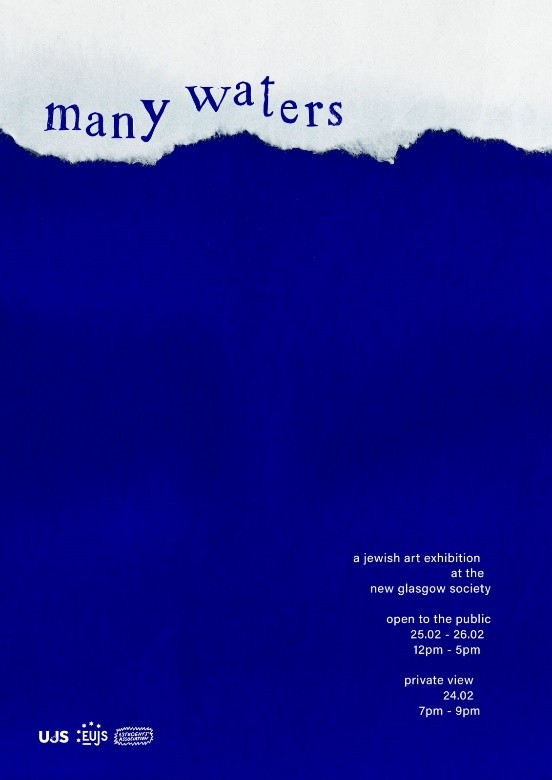
Much like Schotz’s exhibition, Many Waters (24-26/2, New Glasgow Society) sought to celebrate Jewish culture and creativity in Glasgow, while serving as a hopeful expression of resilience and community in challenging times.
The exhibition included artworks by Jewish students and graduates in Glasgow, who work across multiple disciplines (sculpture, painting, graphic design, silversmithing, etc.). Following a visit to the Scottish Jewish Archives Centre at the Garnethill Synagogue, these artists created works that explore the history of the Jewish community in Glasgow, as well as themes of migration, home, family, and community, and reflect on what it means to be Jewish here and now.
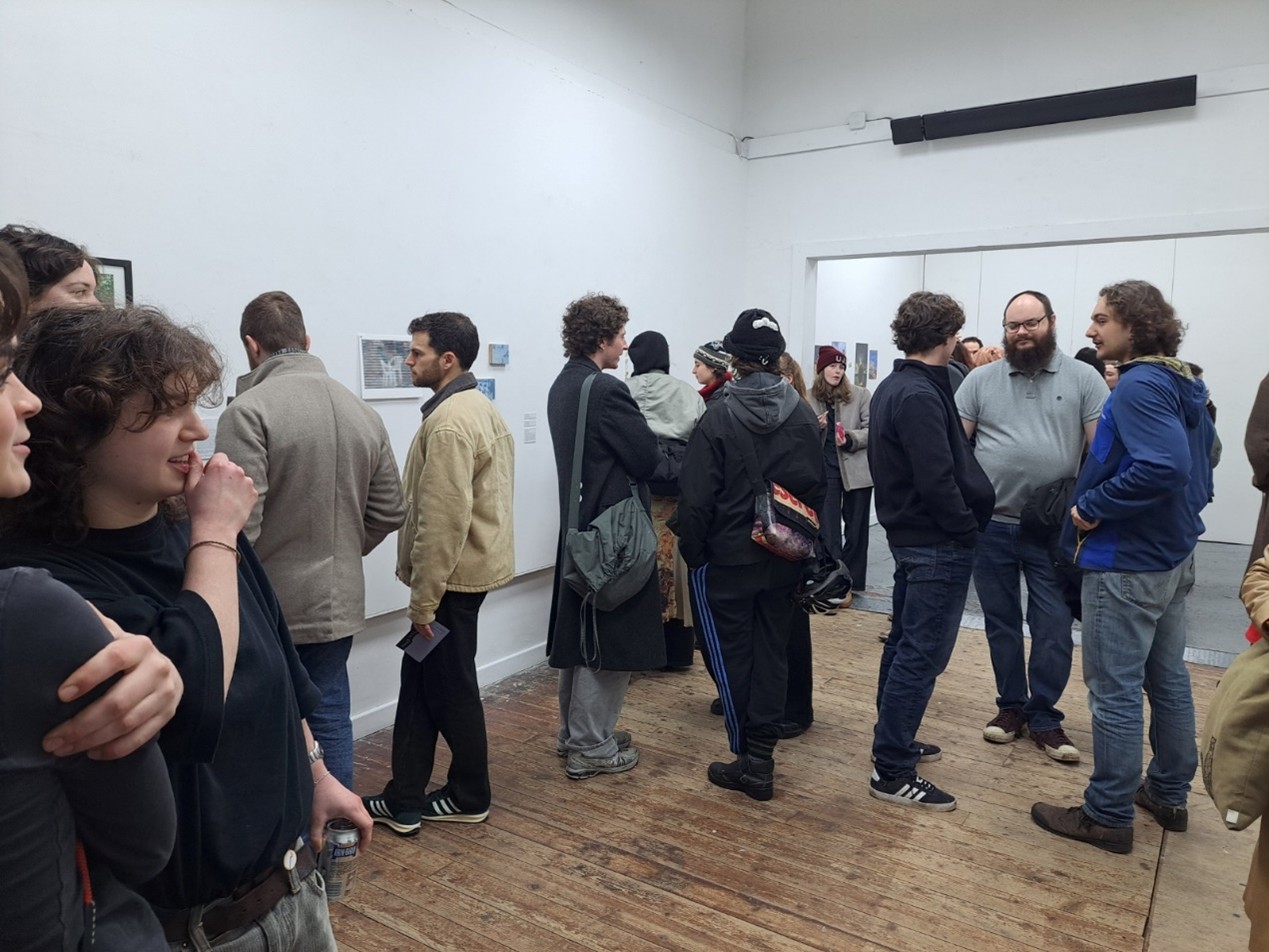
The exhibition’s name, derived from the Song of Songs verse, “Many waters cannot quench love, nor can rivers wash it away”, hints at themes of love and resilience that run throughout the exhibition.
Many of the artworks in Many Waters focus on craft and food as means of passing down tradition, resources of perseverance through dark times, and opportunities for spiritual and communal connection.
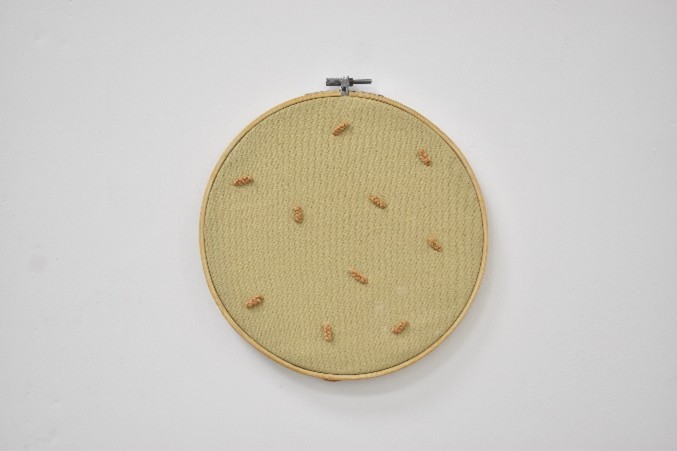
Some even combine both food and craft, such as in Adi Nehoray’s Stitch the Dough, Braid the Thread – an embroidery piece in which she wove threads into miniature Challah (Jewish Bread), and paid homage to her grandmothers who passed down their skills unto her.
Talia Mizrahi’s untitled screen-printed poems explore how our senses conjure up histories of migration and community traditions.
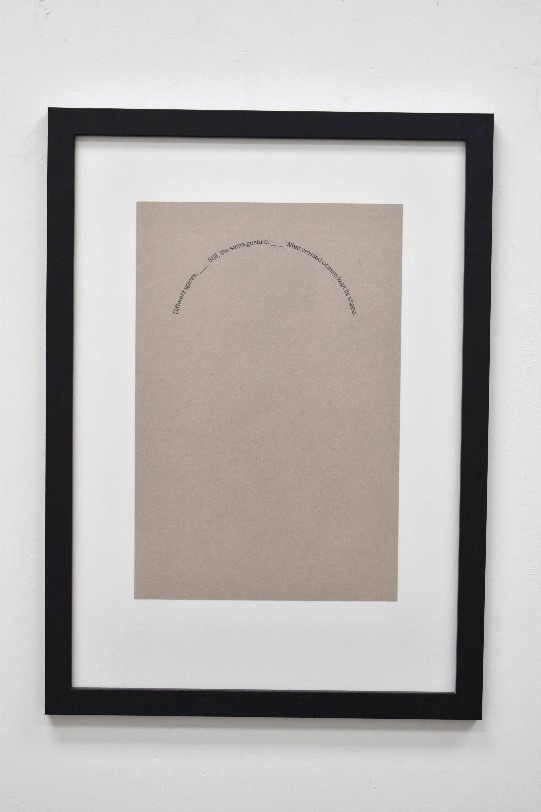
In one of her poems, written in a half circle that perhaps evokes a plate of food, she writes: ‘Different spices. / Still, the same gesture. / What crossed oceans kept its shape.’, highlighting the connection between familiar sensory experiences through culture and the resilience of a people.
Other works in the exhibition deal with the political realities that face the Jewish people around the world, and the existential challenges we face around the Israeli-Palestinian conflict and the rise of antisemitism around the world.
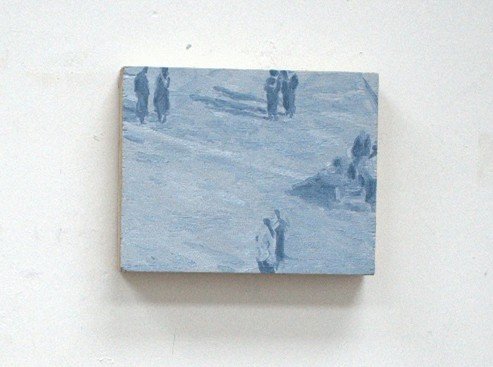
Jacob Venit’s Wall Plaza Fragment reflects his experience as a diasporic Jew living in the digital age, where he’s able to witness the Western Wall through a 24/7 livestream – a cold, blue, abstracted by digital degradation representation of the site. In this painting, he contemplates his sense of geographic, emotional, and ideological removal from Israel, amidst the ongoing conflict it is tragically steeped in.
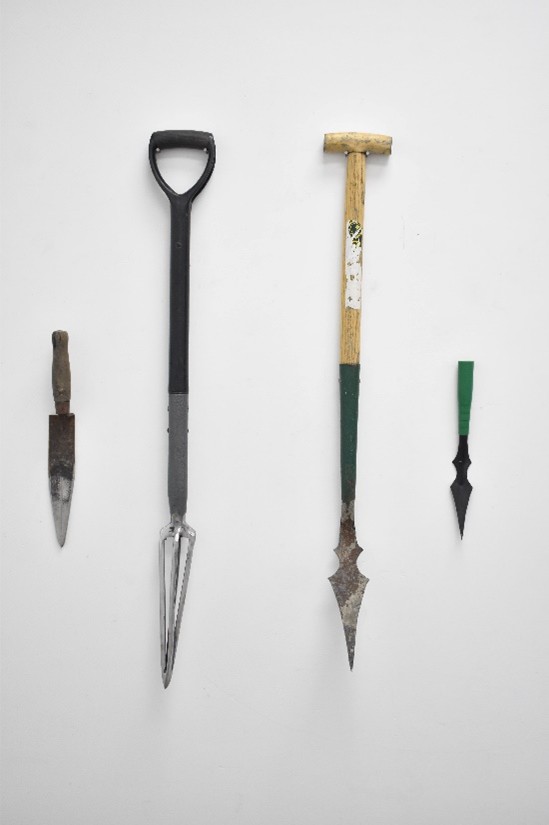
Yahel Halevi’s ‘They shall beat their swords into ploughshares’ cynically reflects on the state of the world. By fashioning gardening tools into weapons, he reverses the prophecy from the Book of Isaiah (“They shall beat their swords into plowshares, and their spears into pruning hooks; nation shall not lift up sword against nation, neither shall they learn war any more”) and suggests that humanity has not yet reached that vision of peace.
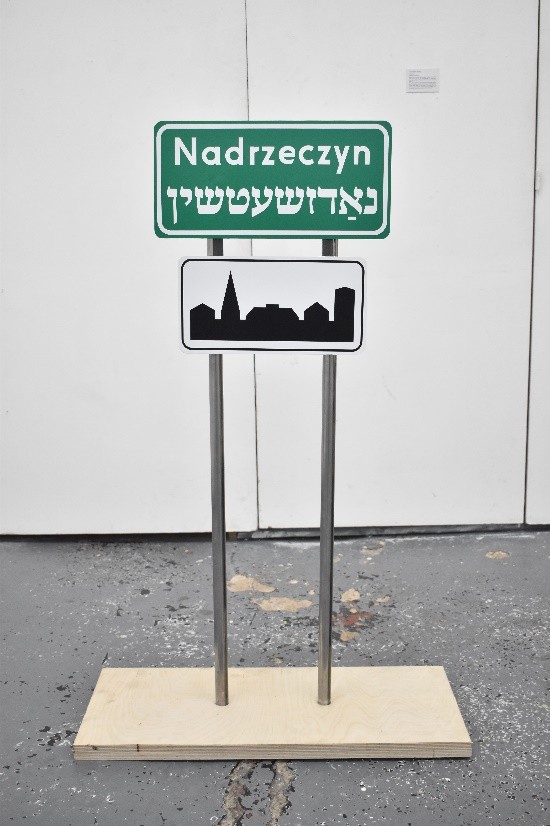
In Polin, פולין (the Hebrew and Yiddish name of Poland, which can be translated as ‘here you shall dwell’), Alasdair Haig explores notions of homeland, security, and belonging through a physical representation of a hypothetical alternative homeland for the Jewish people. The imaginary town for which he crafts this sign could perhaps have been a real place if Jewish communities continued to survive and thrive in Eastern Europe, where they were persecuted.
By presenting all these works (and more) together, Many Waters showed a beautifully wide range of perspectives on artmaking and Jewish identity. Whether through photography, 3D printing, welding, or weaving, the artworks in this exhibition highlight Jewish creativity, diversity, and community, and propose a multifaceted answer to the question – what does it mean to be a Jewish artist, here and now?
- Yahel Halevi, co-president at Glasgow JSoc
[ad_2]
Source link