[ad_1]
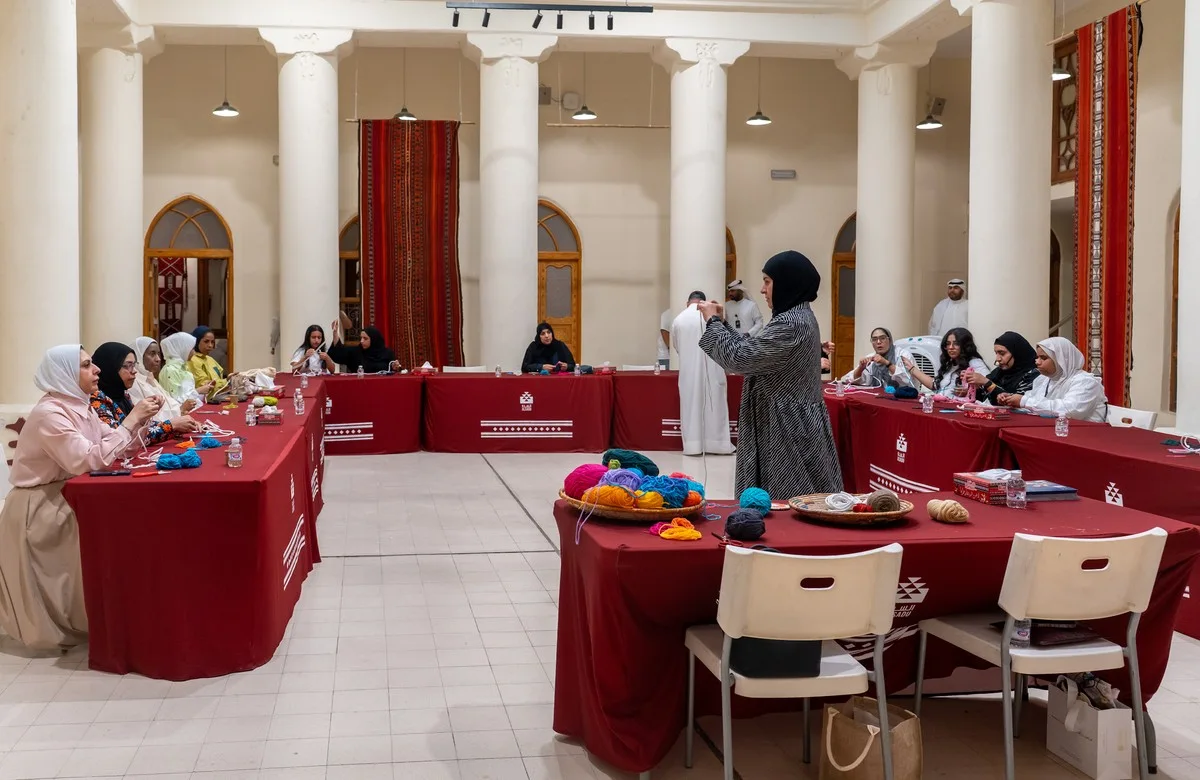
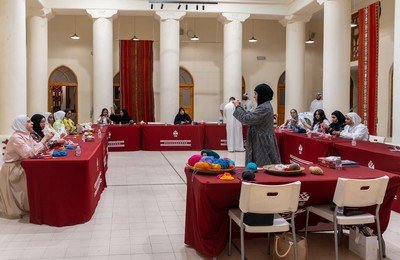
A coaster weaving workshop was held as part of the 17th Cultural Summer Festival activities.
KUWAIT CITY, Aug 4: A new generation of artisans had the opportunity to engage with one of Kuwait’s most cherished traditions at a coaster weaving workshop held as part of the 17th Cultural Summer Festival. The event, which took place at the Sadu House, offered participants a hands-on experience in learning the basics of weaving, with a focus on creating beautiful and practical coasters.
The workshop, which drew a strong crowd of both seasoned handicraft enthusiasts and eager beginners, was led by Hayat Al-Balushi, a renowned trainer in traditional crafts. Al-Balushi explained that participants learned how to use colored wool threads to craft circular coasters, transforming simple materials into elegant pieces that added a decorative touch to any table.
Organized by the National Council for Culture, Arts, and Letters (NCCAL) in cooperation with the Sadu Crafts Association, the event was met with enthusiasm from attendees of all ages. Al-Balushi praised the council’s ongoing efforts in providing educational workshops and cultural activities during the summer. She emphasized how these initiatives are invaluable in fostering the creative skills of both youth and adults, while also strengthening their connection to Kuwait’s rich cultural heritage.
“The Sadu art form is one of the oldest traditional crafts in Kuwait and the Arabian Gulf, and it remains a key part of our identity,” Al-Balushi said. “By teaching new generations this art, we ensure the preservation of an essential cultural practice.”
Sadu, which involves weaving wool on a hand-made loom, is not just a craft but a vital expression of the desert environment and popular beliefs. The motifs woven into Sadu textiles are rich in symbolic meaning and often feature geometric patterns that reflect the natural and cultural landscape of the region.
Historically, Kuwaitis used Sadu weaving to create tents, camel covers, household decorations, and other essential items. The Sadu House, established in 1979, has played a pivotal role in preserving this art form. Serving as a cultural and craft center, it has offered a variety of workshops and periodic exhibitions to highlight the significance of Sadu weaving and its ongoing role in expressing Kuwaiti national identity.
In recognition of Kuwait’s commitment to preserving the art of Sadu weaving, the World Crafts Council officially designated Kuwait City as a global city for the craft of Sadu weaving in March 2025. This honor reflects Kuwait’s leadership in the field of handicrafts and its dedication to safeguarding intangible heritage for future generations.
Al-Balushi emphasized the importance of such cultural initiatives in investing in the youth, providing them with opportunities to develop their skills in a meaningful way. “These workshops give young people a chance to connect with their heritage while also developing practical skills,” she noted. “It’s a great way to spend leisure time and make something beautiful at the same time.”
As Kuwait continues to celebrate and invest in its rich cultural heritage, the Sadu House remains a central hub for nurturing and promoting this unique aspect of Kuwaiti identity, ensuring that the art of Sadu weaving endures for generations to come.
[ad_2]
Source link