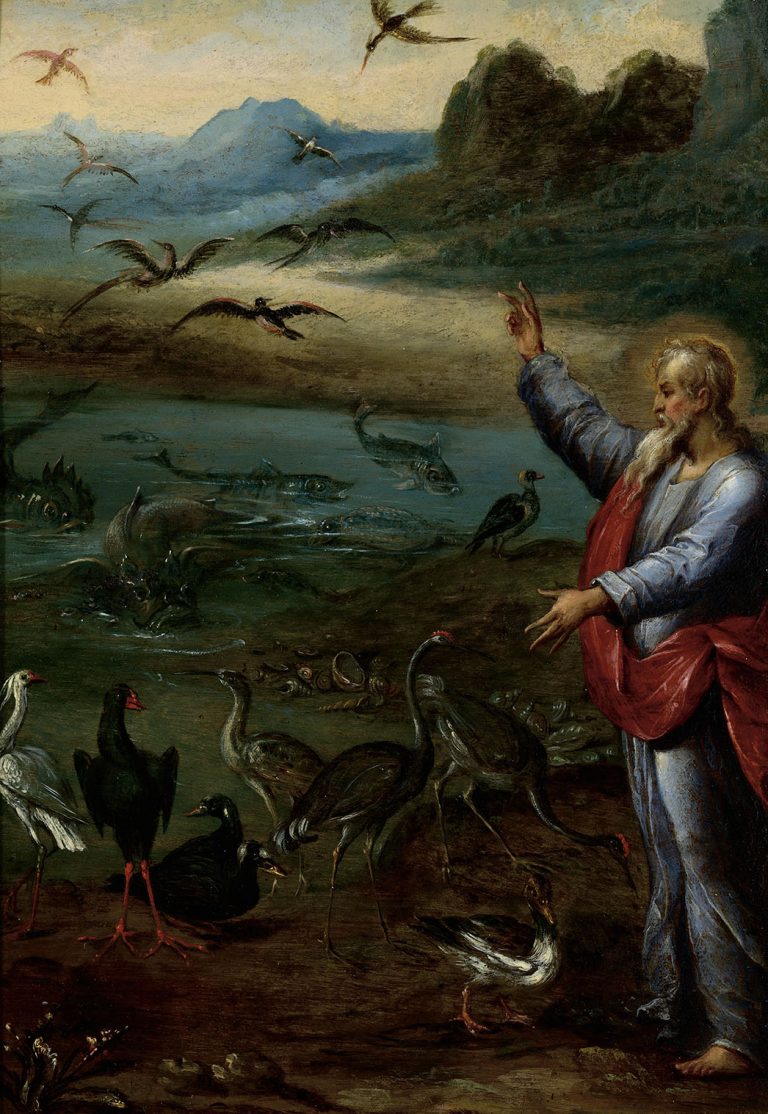
Jan van Kessel I (attributed), Creation of the Birds and Fishes, c. 1650. Oil on copper, 9 3/4 x 7 inches (24.8 x 17.8 cm). Collection of the Nasher Museum of Art at Duke University. Gift in honor of Marilyn M. Segal by her children, 1998.22.5. Photo by Peter Paul Geoffrion.
Artistic representations of nature are never neutral. From our oldest societies, humans have projected meaning onto the landscapes, plants and animals around them. This installation examines the different ways humans contend with the natural world through objects created in contexts spanning the Nasher Museum’s collections.
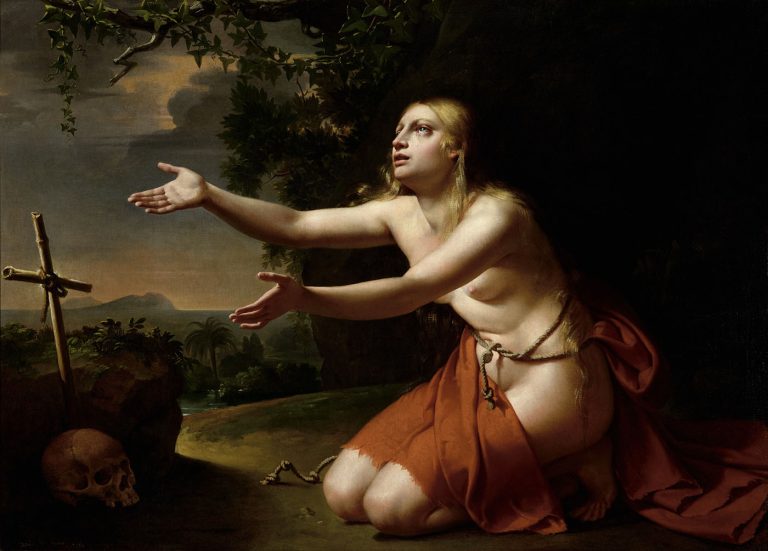
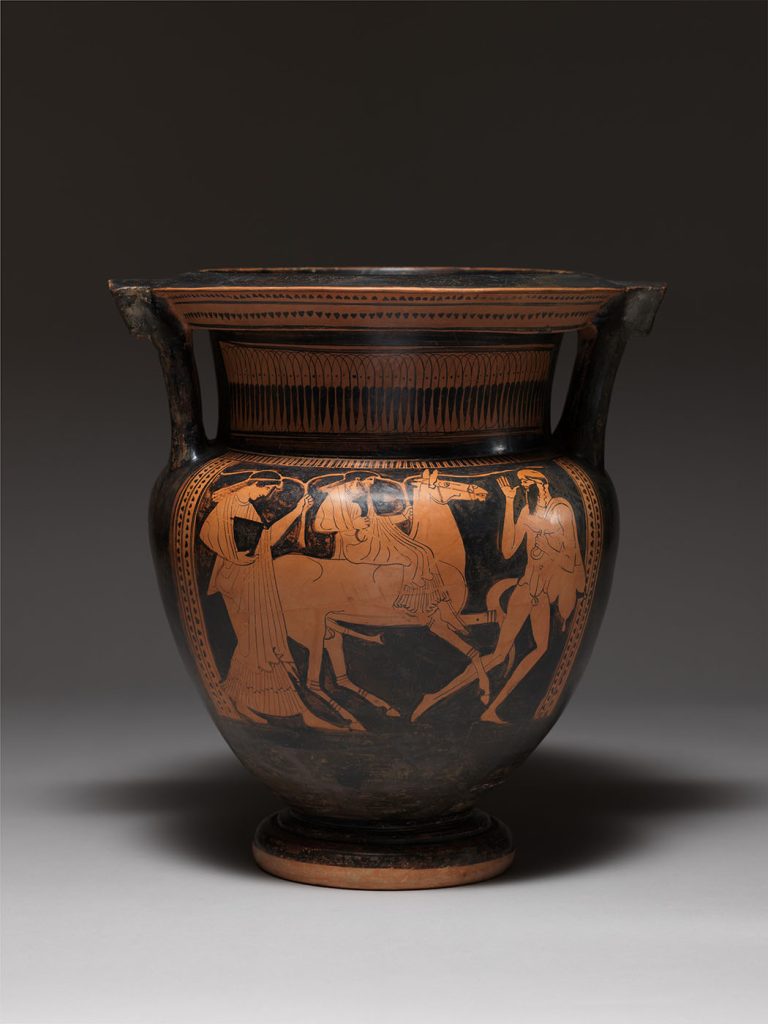
The works in this gallery are arranged in four thematic clusters. Some of the oldest objects—a medieval capital, a book of hours, a Greek vase and a 19th-century French painting—explore the ambiguous position of humans living outside the boundaries of society: as both models of morality and sources of suspicion. A second cluster includes two West African headpieces, a colonial Latin American scroll and a 16th-century print that embody humanity’s struggle to cope with the uncertainties of nature.
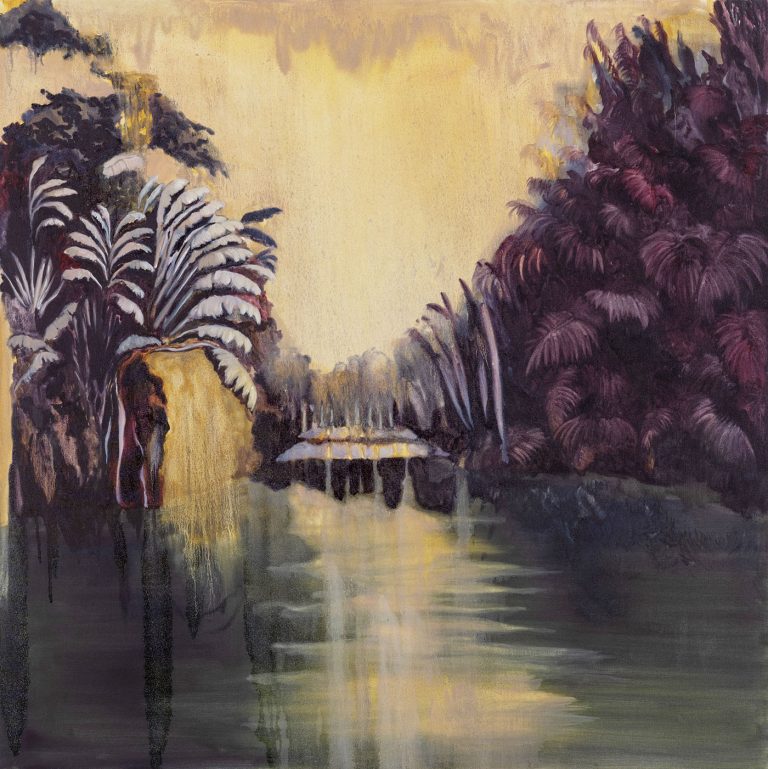
Prints by Piranesi and Aegedius Sadeler as well as a page from a fictional atlas created by Romanian artist Ion Bitzan reveal how artists impose their own beliefs and philosophies onto represented landscapes. The final grouping of works by John James Audubon, Jan van Kessel I and contemporary South African artist, Ravelle Pillay, examines artistic creation as a means of exerting control over the natural landscape, especially in contexts of colonization.
(Un)Natural: Constructed Environments is the curatorial debut for Associate Curator Katherine Werwie, who arrived at the Nasher Museum in June 2023.
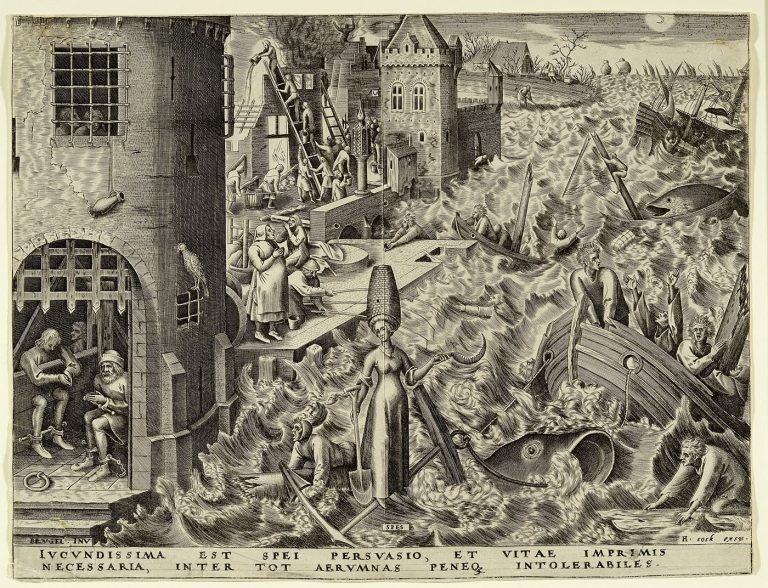
Philip Galle, Spes (Hope) from the series The Seven Virtues (after Pieter Brueghel the Elder), 1559–1560. Published by Hieronymus Cock. Engraving on paper, 8 13/16 x 11 1/2 inches (22.4 x 29.2 cm). Collection of the Nasher Museum of Art at Duke University. Museum purchase with funds provided by Nanci Leila Weldon ’64 Memorial Fund, 1972.3.1. Photo by Peter Paul Geoffrion.
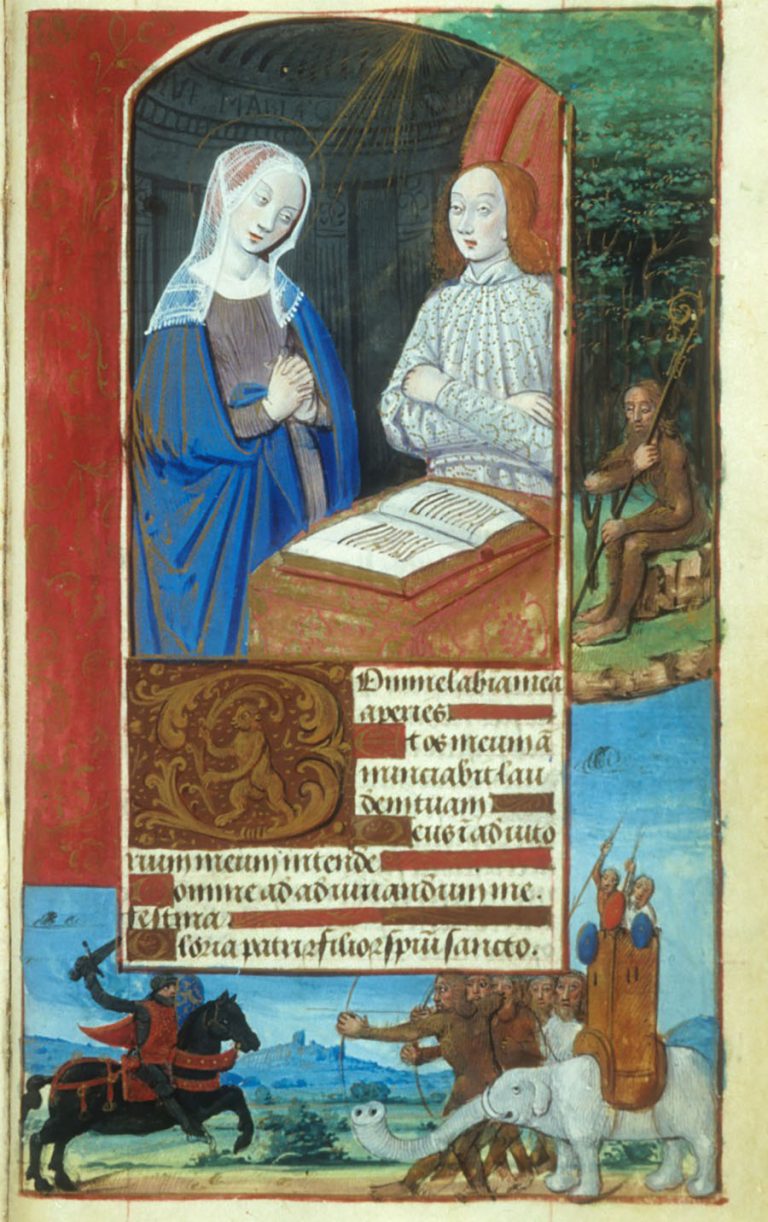
Workshop of Jean Bourdichon, Illuminated folio with the Annunciation and marginal images of wild men from a Book of Hours, c. 1490. 156 page codex with tempera, shell gold, and ink on vellum, closed dimensions: 6 15/16 × 4 3/8 × 1 3/16 inches (17.62 × 11.11 × 3.02 cm). Collection of the Nasher Museum of Art at Duke University. Museum purchase, 1993.2.1. Photo by Duke Digital Collections for Duke University Libraries.
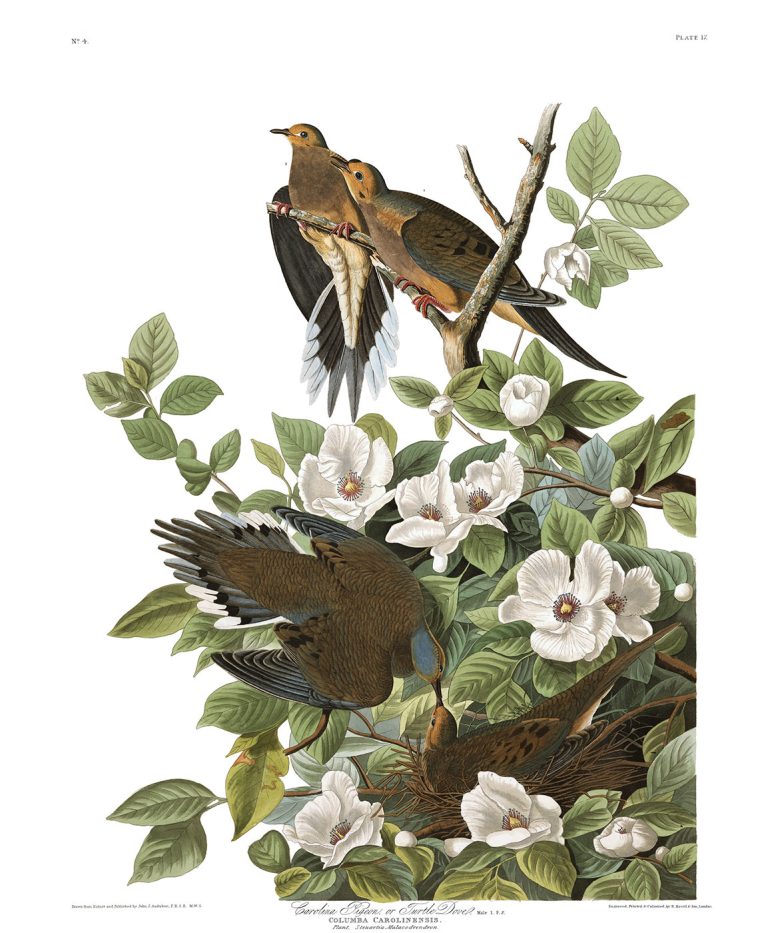
John James Audubon, Carolina Pigeon (or Turtle Dove) from the portfolio Birds of America, 1826–1838. Hand colored engraving with aquatint and etching on paper, 38 1/4 × 23 inches (97.2 × 58.4 cm). Collection of the Nasher Museum of Art at Duke University. Gift of the Richard B. Anderson Family Foundation, 2016.9.8. Image courtesy of the John James Audubon Center at Mill Grove in Audubon, Pennsylvania, and the Montgomery County Audubon Collection.
Artist Unknown, Saint Emygdius, 18th century. Oil on canvas, 18 x 16 1/2 inches (45.7 x 41.9 cm). Collection of the Nasher Museum of Art at Duke University. Gift of Ann Elizabeth Hiott, MD, 2001.36.1. Photo by Peter Paul Geoffrion.
Merry Joseph Blondel, The Penitent Magdalene, 1811. Oil on canvas, 59 1/2 x 78 1/4 x 4 inches (151.1 x 198.8 x 10.2 cm). Collection of the Nasher Museum of Art at Duke University. Museum purchase, 2001.13.1. Photo by Peter Paul Geoffrion.
The Syracuse Painter (attributed), Greek (Athenian), Red figure column krater, 470–460 BCE. Ceramic, 14 7/8 x 13 3/4 x 13 3/4 inches (37.8 x 35 x 35 cm). Collection of the Nasher Museum of Art at Duke University. The Duke Classical Collection, DCC1971.2. Photo by Brian Quinby.
Jan van Kessel I (attributed), Creation of the Birds and Fishes, c. 1650. Oil on copper, 9 3/4 x 7 inches (24.8 x 17.8 cm). Collection of the Nasher Museum of Art at Duke University. Gift in honor of Marilyn M. Segal by her children, 1998.22.5. Photo by Peter Paul Geoffrion.
[ad_1] Salon Art + Design has returned for its 12th year in New York City at the Park Avenue Armory with new galleries and unique displays of collectible design, including
[ad_1] Showcasing works from watercolours to paintings created entirely from mineral pigments, Nature in Art in Twigworth has revealed a trio of exciting exhibitions coming to the museum in spring
[ad_1] Titled Wild Nature, the solo show by Devon-based artist Lisa Parkyn is now on display at the Fine Foundation Gallery at Durlston Country Park and runs until Wednesday, April
[ad_1] Home History & Culture Art of nature: a depiction of world and culture By Judith Magee • 8 March 2010 Red-shouldered hawk by John James Audubon, published 1827 Artistic