
[ad_1]
Madras, Aug. 26: Remarkable paintings of 17th century, depicting the entire epic Ramayana, have just been discovered in the Venugopala Parthasarathi temple in Chengam in North Arcot district by the State Archaeology Department.
The sanctum, the preceding Manadapam and the Mahamandapam of the temple have been built by Nayak chief of Gingee in 1,600 AD. According to an inscription, the name of the principal deity is Arjuna Sarathi and Gopalakrishnaswami. The beautiful idol is holding a whip in its right hand, in addition to bearing the Sanku and Chakra in the upper arms, indicating Krishna acting as the charioteer to Arjuna in the Kurukshetra war. According to Mr. R. Nagaswami, Director of Archaeology, the present image of Parthasarathi in the temple at Triplicane was also installed about this time.
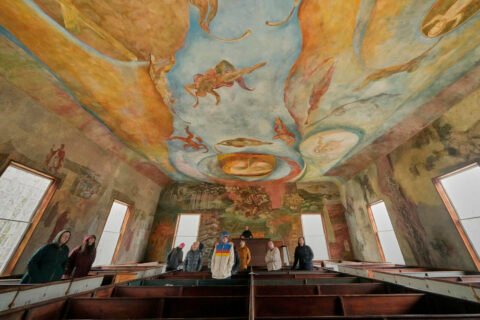
The series of paintings are found on the ceiling of the Mahamandapam, which also contains a portrait of the Nayak chief who erected the shrine. While the murals on the outer squares have withered, those in the inner walls are fairly well-preserved. The surviving paintings portray the fight between Lakshmana and Indrajit, Hanuman fetching the Sanjeevi mountain, Rama-Ravana battle, Ravana’s death, Sita’s Agnipravesam, Rama’s return to Ayodhya in the Pushpaka Vimanam and Rama Pattabhishekam. The coronation scene is an excellent piece of work, Mr. Nagaswami said. The story of Ramanayam has been told in a continuous narration with consummate skill and artistry.
Published – August 27, 2025 03:28 am IST
[ad_2]
Source link