[ad_1]
The Acropolis Museum in Athens is launching a thought-provoking exhibition this spring that bridges ancient Mesopotamian heritage with contemporary art, shedding light on the destruction and displacement of cultural treasures.
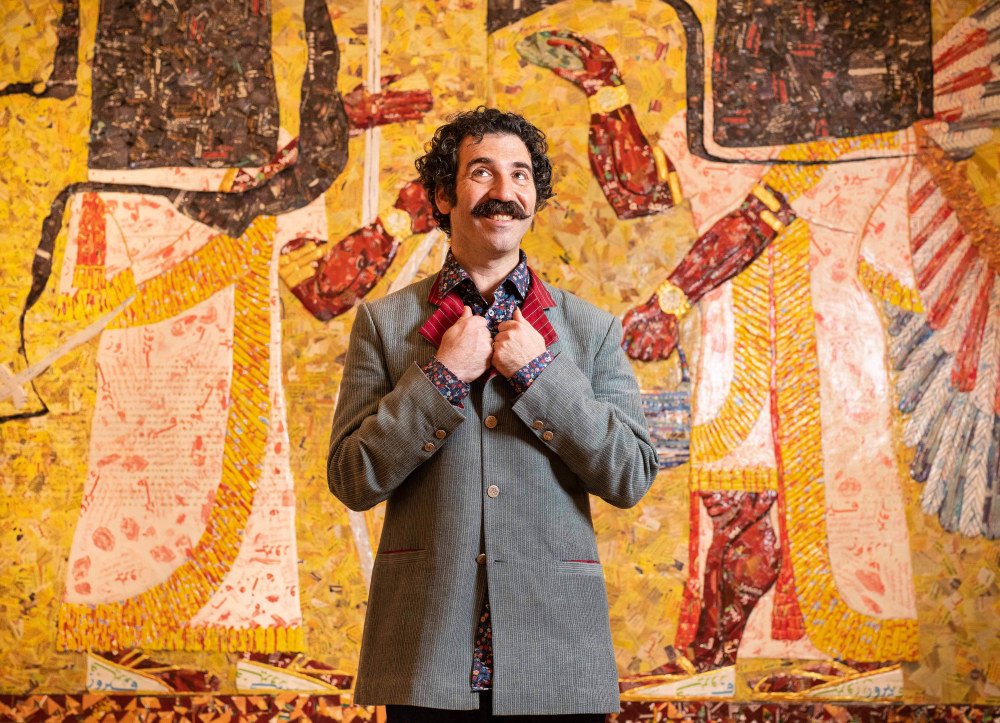
From May 12 to October 31, the museum will host “Allspice – Michael Rakowitz and Ancient Cultures,” a collaborative show with the cultural organization NEON, featuring works by acclaimed Iraqi-American artist Michael Rakowitz.

The exhibition explores the impact of war, colonialism, and migration on cultural heritage, drawing connections between the looting of Iraq’s antiquities after the 2003 U.S. invasion, the destruction of Mosul by ISIS in 2015, and wider global issues of cultural loss and restitution. Rakowitz, born in the U.S. in 1973 to a Jewish family of Iraqi descent, has dedicated much of his artistic career to reclaiming and reimagining lost or stolen artifacts.

A central component of the exhibition is Rakowitz’s long-term project “The invisible enemy should not exist,” which he began in 2007. In it, he reconstructs destroyed or looted artifacts using everyday materials such as cardboard, Arabic-English newspaper clippings, and food packaging from Iraqi markets. Among the highlights on display are 48 vibrant recreations of relief panels from the ancient Assyrian palace of Nimrud—an iconic site built in the 9th century BC and destroyed by ISIS in 2015. The original reliefs, now scattered across major institutions like the British Museum and the Metropolitan Museum of Art, are brought back to life through Rakowitz’s distinct visual language.

The contemporary artworks are exhibited in dialogue with 13 ancient artifacts, 12 of which originate from Mesopotamia and date from the 3rd and 2nd millennia BC. These include rare vessels and figurines, such as a fragment of a stone vessel showing a herdsman (circa 2900 BC) and a clay mold of a bearded male figure holding grain. The objects are on loan from the Institute for the Study of Ancient Cultures at the University of Chicago.
In addition, a Cypriot artifact—a bearded male head from the 5th–4th century BC—will be lent by the Museum of Cycladic Art. The show also includes a complete set of the Chicago Assyrian Dictionary, underscoring the academic and cultural efforts to preserve Mesopotamian language and history.
Approved by Greece’s Central Archaeological Council earlier this week, this exhibition invites Greek and international visitors to reflect on the shared vulnerabilities of cultural heritage and the urgent need for its protection and remembrance.
[ad_2]
Source link