[ad_1]
RIYADH
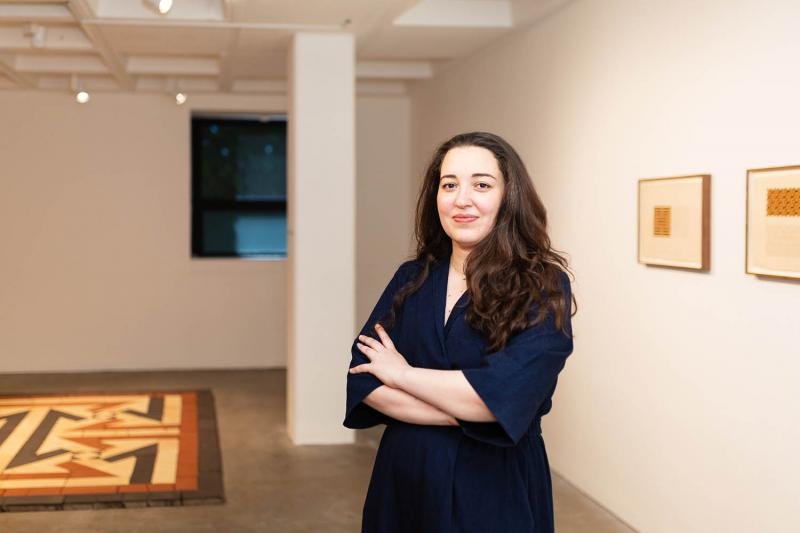
Saudi artist Dana Awartani has been announced as Saudi Arabia’s representative at next year’s Venice Biennale, with curator Antonia Carver and assistant curator Hafsa Alkhudairi overseeing the project. The pavilion will mark a continuation of Saudi Arabia’s commitment to showcasing contemporary art within its permanent Arsenale space.
Awartani, a prominent figure in Saudi Arabia’s vibrant new generation of artists, is known for her meticulous engagement with craft traditions and cultural heritage. Often collaborating with skilled artisans, she draws on practices she has personally trained in, creating works that bridge history and contemporary artistic expression.
A graduate of London’s Central Saint Martins, Awartani resisted conventional expectations placed upon Arab women artists. She furthered her studies in Islamic geometry at the Prince’s School of Traditional Arts and completed an ijaza, formal certification in the traditional craft of illumination, in Turkey. These dual influences continue to inform her practice, which oscillates between intricate artisanal techniques and broader cultural narratives.
While Awartani has not revealed the exact form her Venice pavilion work will take, she emphasises that it will be rooted in heritage and collective memory. “When people talk about heritage sites in places where they’re from, it’s not just brick and mortar or stone buildings,” she explains.
“It’s a place that holds memory. It’s a place that gives them a sense of belonging, part of your everyday fabric of life. Especially in the Middle East, we still live with our heritage.”
Her work often responds to the fragility of historical sites amid contemporary conflict. In a 2025 exhibition at Bristol’s Arnolfini, she reconstructed the tiled floor of Gaza’s 14th-century Hamam al-Sammara, destroyed in Israeli strikes in 2023.
Earlier, for the 2021 Diriyah Biennale in Riyadh, she re-staged the intricate patterns of Aleppo’s Grand Mosque, damaged in the Syrian civil war. For both projects, she worked with Saudi mud-brick artisans, intentionally omitting the hay binding the bricks to allow cracks to form, highlighting the vulnerability and impermanence of these cultural sites.
Carver, director of Art Jameel and a leading figure in Gulf contemporary art, praised Awartani’s ability to move seamlessly “between the micro and the macro,” capturing the delicate textures of materials while addressing the larger narrative of cultural heritage.
“Contemporary art is being produced at the same time as cultural destruction is taking place. It feels vital to convey that sense of collapse between the ancient and contemporary at Venice,” she said.
Alkhudairi, meanwhile, brings experience from curatorial work in AlUla, Saudi Arabia’s northwestern cultural hub, ensuring the pavilion reflects both the country’s rich heritage and its dynamic contemporary scene.
With the Venice Biennale representing a global stage for dialogue between past and present, Awartani’s pavilion promises a meditation on memory, resilience and the fragile beauty of cultural heritage in a world of uncertainty.
[ad_2]
Source link